
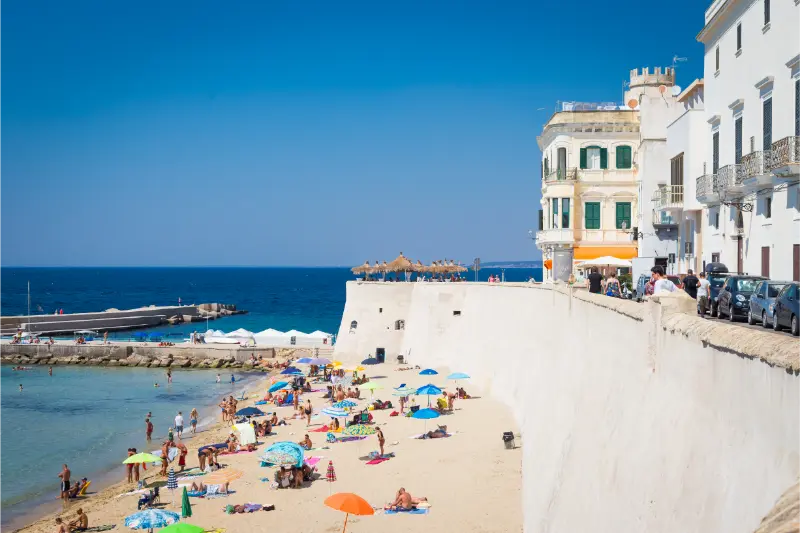
Puglia is the kind of destination that can completely change character within the space of a short drive. One morning you can be walking between the whitewashed houses and conical trulli of the Valle d’Itria, and by late afternoon you may be swimming in clear turquoise water or watching the sun disappear over the Ionian Sea.
Occupying the heel of Italy, Puglia, also known as Apulia, is bordered by both the Adriatic and Ionian seas, giving the region an exceptionally long and varied coastline. But the sea is only part of the story. Historic cities, tiny hilltop villages, olive groves, vineyards, masserie, medieval castles and a food culture deeply connected to the land make Puglia one of southern Italy’s most rewarding regions to explore.
What makes a trip here particularly appealing is the variety. You can spend a few days focusing on beaches, plan a road trip between villages, stay in a traditional trullo, explore the Baroque streets of Lecce, hike through Gargano, or simply slow down and build your days around good food and small towns.
This Puglia travel guide will help you understand where to go, what to see, how long to stay, when to visit and how to get around, especially if this is your first trip to the region.
Puglia at a Glance
- Best for: beaches, historic towns, road trips, food, couples, families and slow travel
- Best time for sightseeing: spring and early autumn
- Best time for a beach holiday: summer and early September
- Ideal first trip: around 7–10 days
- Main airports: Bari and Brindisi
- Car recommended: yes for a broader road trip, but not essential for every itinerary
- Main seas: Adriatic Sea and Ionian Sea
- Don’t miss: Bari, Alberobello, Valle d’Itria, Ostuni, Lecce and at least one stretch of coast
Where Is Puglia?
Puglia stretches along the southeastern side of Italy and forms the heel of the Italian peninsula. The region is unusually long and narrow, which is one of the first things to understand when planning a trip.
Bari and the central Adriatic coast sit roughly in the middle of the region, Gargano occupies the northern section, while Salento extends south between the Adriatic and Ionian seas.
This geography matters because Puglia is larger than many first-time visitors expect. Trying to combine northern Gargano, central Puglia and southern Salento in only three or four days usually means spending too much time driving and too little time actually enjoying the places you came to see.
A much better approach is to choose one or two areas if you have a short break and save a full north-to-south road trip for a longer stay.
Understanding the Main Areas of Puglia
One of the easiest ways to plan a holiday in Puglia is to stop thinking of the region as a single destination. Its different areas offer noticeably different landscapes and experiences.
Bari and Central Puglia
This is one of the most convenient areas for a first visit, particularly if you arrive at Bari Airport.
Bari combines a lively working city with an atmospheric old town, while the coastline south of the city leads towards some of Puglia’s best-known destinations, including Polignano a Mare and Monopoli.
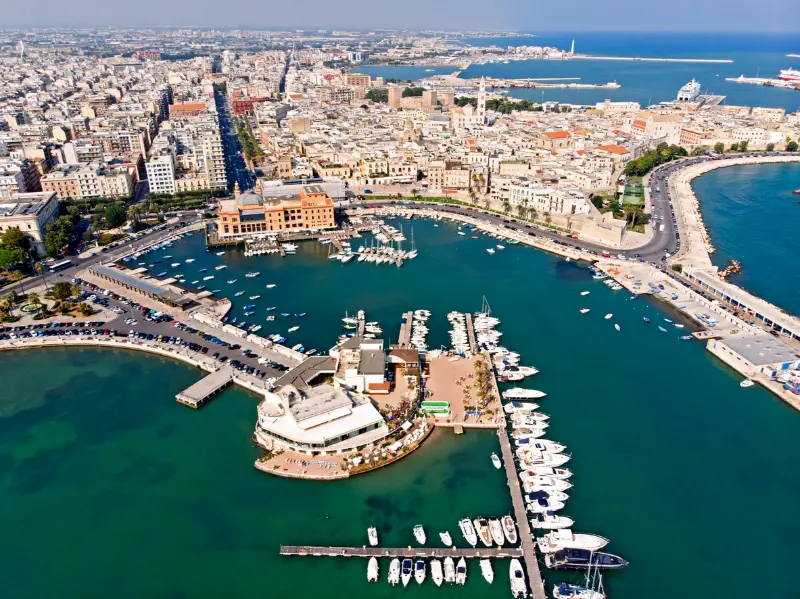
Choose this area if you want good transport connections, historic towns, coastal excursions, excellent food and a practical base for several day trips.
Valle d’Itria
For many international visitors, Valle d’Itria looks exactly like the Puglia they imagined before arriving.
This is the land of trulli, dry-stone walls, olive trees, countryside stays and beautiful white towns. Alberobello is the most famous destination, but Locorotondo, Cisternino, Martina Franca and the surrounding countryside deserve time too.
This area works particularly well for couples, road trips and travellers looking for a more relaxed countryside experience.
Salento
Salento occupies the southern part of Puglia and gives you access to both the Adriatic and Ionian coasts.
Lecce provides the cultural heart of the area, while Otranto, Gallipoli and numerous smaller coastal destinations make Salento particularly appealing during summer.
Come here for beaches, Baroque architecture, coastal drives, nightlife, traditional villages and long summer evenings.
Gargano and Daunia
Gargano feels noticeably different from much of southern Puglia.
Instead of long stretches of open countryside, you will encounter a dramatic promontory, forests, limestone cliffs, coves and historic coastal towns.
The interior includes the Foresta Umbra, while the coast around Vieste offers beaches, cliffs and sea caves.
It is one of the areas I would strongly recommend if you enjoy nature as much as towns and beaches.
Taranto and the Ionian Coast
The Ionian side offers some of Puglia’s most attractive stretches of sandy coastline.
Taranto adds history and archaeology, while travelling south brings you increasingly close to the beaches and seaside towns associated with Salento.
This side can be particularly appealing to travellers whose priority is spending long days by the sea rather than moving constantly between famous sightseeing destinations.
Murgia and Inland Puglia
Not every memorable place in Puglia is beside the sea.
Heading inland reveals rocky landscapes, caves, ravines, farmland and historic settlements. One of Puglia’s most important monuments is also here: Castel del Monte, the distinctive 13th-century castle associated with Emperor Frederick II.
This is a good area to include when you want to discover a quieter and less obviously tourist-oriented side of Puglia.
Best Places to Visit in Puglia
You could easily build a long holiday around dozens of towns and villages, but for a first visit these are some of the places I would put highest on the list.
Bari
Do not treat Bari simply as the place where your plane lands.
The regional capital deserves at least several hours and preferably a full day. The historic centre, usually known as Bari Vecchia, is a maze of narrow streets that contrasts sharply with the more orderly modern city around it.
Bari is especially enjoyable when you approach it without trying to tick off monuments too quickly. Walk through the old streets, stop along the seafront and make food part of the experience.
It is also one of the most practical bases for travellers planning to use public transport.
Recommended time: 1–2 days.
Polignano a Mare
Polignano a Mare has become one of Puglia’s most recognizable coastal destinations.
Its historic centre sits above the Adriatic on dramatic limestone cliffs, with viewpoints opening onto the coast and the famous beach of Lama Monachile.
It is undeniably popular, particularly in summer, but it still deserves a place on a first-time itinerary.
My advice is simple: do not visit only for the famous beach photograph. Give yourself enough time to wander through the historic centre and discover the panoramic terraces overlooking the sea.
Recommended time: half a day to one day.
Monopoli
If Polignano feels like the postcard, Monopoli often feels like somewhere you can stay a little longer.
The old harbour, historic centre, small urban beaches and restaurants make it an excellent base on the central Adriatic coast.
It also combines naturally with Polignano a Mare on a shorter itinerary.
Recommended time: one day, or several nights if using Monopoli as a base.
Alberobello
There is nowhere else in Puglia quite like Alberobello.
Its trulli are traditional limestone buildings constructed using dry-stone techniques and topped by characteristic conical roofs. The concentration of these distinctive buildings has made Alberobello one of Puglia’s most famous destinations and a UNESCO World Heritage Site.
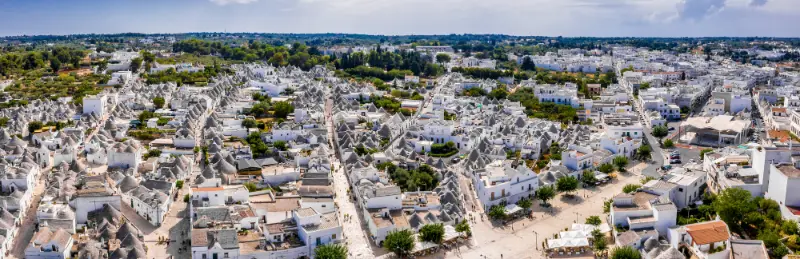
The busiest streets can feel very touristy, especially during peak daytime hours, so explore beyond the most photographed routes.
If possible, arrive early in the morning or remain until later in the day, when the atmosphere becomes much more pleasant.
Recommended time: half a day to one day.
Locorotondo
Locorotondo offers a quieter contrast to Alberobello.
Its compact white historic centre, narrow lanes, balconies and views over the Valle d’Itria make it one of the best villages for simply walking without an ambitious sightseeing plan.
I would pair Locorotondo with time in the surrounding countryside rather than rushing through it as another quick photo stop.
Recommended time: 2–4 hours.
Ostuni
Known as the White City, Ostuni rises above a landscape filled with olive trees and countryside.
The pleasure here is largely in exploring. Stairways, arches, narrow lanes and unexpected viewpoints are often more memorable than following a rigid list of attractions.
Ostuni also works well as a base between Valle d’Itria and the Adriatic coast.
Recommended time: half a day to one day.
Lecce
Lecce is one of the cities I would absolutely include on a first trip to southern Puglia.
It offers a very different atmosphere from the white villages, with ornate Baroque architecture, warm-coloured stone façades, piazzas, churches and a lively evening scene.
It is also a useful base if you want to explore Salento without changing accommodation every night.
Recommended time: 1–2 days.
Otranto
Otranto combines a historic centre with the sea, making it one of the easiest places in Salento to enjoy both sightseeing and a coastal atmosphere.
Its old town is compact enough to explore on foot, while the surrounding Adriatic coastline gives you plenty of options for extending the visit with beaches and scenic drives.
Recommended time: one day, or longer for a beach-based stay.
Gallipoli
On the Ionian coast, Gallipoli offers a very different experience from Otranto.
The historic centre occupies an island connected to the modern town, while the surrounding coastline is known for beach life and an energetic summer atmosphere.
Visit outside the busiest weeks of July and August and the town can feel considerably more relaxed.
Recommended time: one day or several nights.
Vieste and the Gargano
Vieste is an excellent introduction to northern Puglia.
Its historic centre rises above the coast and provides a useful base for exploring beaches, sea caves and the Gargano interior.
Unlike itineraries centred only around Bari, Valle d’Itria and Salento, adding Gargano gives you a much broader impression of Puglia’s landscapes.
Recommended time: at least 2–3 nights for the wider Gargano area.
Trani
Trani is sometimes overlooked by travellers rushing south from Bari, and that is one reason it is worth considering.
The harbour and historic centre create a relaxed setting, while the cathedral beside the sea gives the waterfront an instantly recognizable skyline.
Recommended time: half a day to one day.
Best Things to Do in Puglia
Puglia works best when you mix famous sights with experiences that allow you to slow down and connect with the region.
For bookable tours and activities, check current experiences on GetYourGuide.
Stay in a Trullo
Seeing a trullo is interesting. Sleeping in one can be much more memorable.
The countryside around Alberobello, Locorotondo, Cisternino and Martina Franca contains many beautifully restored trulli that are now used as holiday accommodation.
For a first trip, consider spending at least one or two nights in Valle d’Itria rather than visiting Alberobello only as a quick day trip.
Spend a Night in a Masseria
A masseria is one of the accommodation experiences most closely associated with rural Puglia.
Properties vary enormously, from simple countryside farm stays to luxurious resorts, but the setting itself can add something to your trip that a conventional city hotel cannot.
Visit Castel del Monte
Castel del Monte stands apart from the seaside image of Puglia.
Built in the 13th century, the castle is particularly famous for its geometric octagonal design and is one of the region’s UNESCO World Heritage Sites.
It is worth visiting because it reveals another important layer of Puglia’s history.
Take a Boat Trip
Boat excursions are particularly rewarding along sections of coastline where cliffs and caves are difficult to appreciate from land.
Polignano a Mare and the Gargano are two of the best areas to consider for sea cave and coastal boat tours.
Explore Gargano National Park
If every day of your trip consists of white towns and beaches, Puglia can eventually start to feel visually repetitive.
Gargano changes the landscape completely.
Spend some time walking in Foresta Umbra, exploring the coastline or driving between small towns and natural areas.
Take a Cooking Class
Food is central to the Puglia experience, and a cooking class can be more rewarding than simply ordering regional dishes from a restaurant menu.
Look especially for experiences focused on handmade pasta, orecchiette and traditional family recipes.
Visit a Winery
Wine lovers should leave space in the itinerary for a tasting.
Primitivo and Negroamaro are among the names you will encounter most often, particularly as you travel towards southern Puglia.
Rather than trying to visit several wineries in one day, choose one good producer and make the experience part of a slower countryside itinerary.
Explore a Local Market
One of the easiest ways to make a trip feel less like a checklist is to spend an hour in a local food market.
Fruit, vegetables, cheese, bread, seafood, olives and preserves provide a much more immediate introduction to local eating habits than a souvenir shop ever will.
Best Beaches in Puglia
There is no single best beach in Puglia because the coastline changes significantly from one area to another.
Some parts offer long sandy beaches, while others are characterized by rocky platforms, small coves, dramatic limestone cliffs and sea caves.
For Turquoise Water and Beach Holidays
Look towards Salento and the Ionian coast, where you will find some of the region’s most famous stretches of clear water and pale sand.
For Dramatic Coastal Scenery
Consider Gargano and the central Adriatic coast around Polignano a Mare.
For Beaches Combined with Historic Towns
Monopoli, Otranto, Gallipoli and Vieste all make it relatively easy to combine sightseeing with time beside the sea.
For Families
Do not choose a beach purely by the colour of the water. Look at sandy access, depth, parking, facilities, shade and the distance from your accommodation.
One common planning mistake is booking accommodation first and only afterwards discovering that the beaches you loved in photographs are far away.
If the sea is the main reason for your holiday, choose the coast first and the accommodation second.
What to Eat in Puglia
Puglia is a region where simple ingredients often matter more than elaborate presentation.
Traditional foods vary by area, but several specialties deserve a place on almost every first-time food itinerary.
Orecchiette
These small ear-shaped pasta pieces are one of the foods most strongly associated with Puglia.
They appear in numerous preparations, but the classic combination with turnip tops, known as orecchiette con le cime di rapa, is one of the dishes worth trying.
Focaccia Barese
Especially associated with Bari, focaccia barese is soft inside, slightly crisp outside and traditionally topped with simple Mediterranean ingredients.
It is ideal as a quick lunch or snack rather than something you need to reserve at a formal restaurant.
Burrata
Fresh burrata is now available around the world, but eating it in Puglia while it is exceptionally fresh can be a completely different experience.
Panzerotti
A panzerotto is one of the region’s great casual foods: filled dough, traditionally fried and usually eaten piping hot.
Puccia
More closely associated with Salento, puccia is a local bread that can be filled in many different ways.
It is an excellent option when you want something quick between sightseeing or beach stops.
Pasticciotto
If you are in Lecce or elsewhere in Salento, make room for pasticciotto.
This small pastry traditionally filled with custard pairs perfectly with coffee and provides a very convincing excuse for a second breakfast.
Where to Stay in Puglia
The biggest accommodation decision is not which hotel to book.
It is which part of Puglia should be your base.
For current accommodation options, compare hotels and apartments on Booking.com.
Stay in Bari if…
You are arriving without a car, want good transport connections or plan several excursions along the Adriatic rail corridor.
Stay around Monopoli if…
You want beaches, restaurants and a historic town while remaining well positioned for central Puglia.
Stay in Valle d’Itria if…
You want countryside, trulli, masserie and romantic village scenery.
A car makes this option considerably easier.
Stay in Lecce if…
You want a city base for exploring Salento and prefer restaurants and evening atmosphere within walking distance.
Stay near the Salento coast if…
The beach is your priority and you do not want to drive to the sea every morning.
Stay in Gargano if…
Nature, coastal scenery and a slower northern-Puglia itinerary appeal more than visiting only the region’s most famous southern towns.
One Base or Several?
For 3–4 days, one base is usually enough.
For one week, two bases often work better.
For 10 days or more, dividing the trip between two or three areas usually makes much more sense than repeatedly driving back to the same accommodation.
How Many Days Do You Need in Puglia?
3 Days in Puglia
With three days, resist the temptation to see the whole region.
Choose one compact area.
A good first itinerary could combine Bari, Polignano a Mare, Monopoli and Alberobello.
You will see only a small part of Puglia, but you will actually have time to enjoy it.
5 Days in Puglia
Five days gives you enough time to include central Puglia and part of Valle d’Itria.
For example: Bari, Polignano a Mare, Monopoli, Alberobello, Locorotondo and Ostuni.
You could also spend all five days in Salento if beaches are your main priority.
7 Days in Puglia
A week is what I consider a very good minimum for a first road trip.
You can combine central Puglia, Valle d’Itria and Lecce without turning every day into a long transfer.
10 Days in Puglia
Ten days makes the trip noticeably more relaxed.
You can spend several nights in each base and include beach days without feeling that they are taking time away from sightseeing.
Two Weeks in Puglia
With around two weeks, adding Gargano becomes much more realistic.
This is when I would consider a genuine north-to-south Puglia road trip.
Best Time to Visit Puglia
There is no universally perfect month. The best period depends on what you want from the trip.
Spring
Spring is particularly attractive for sightseeing, countryside trips and road trips.
Temperatures are generally more comfortable for walking than during midsummer, while major tourist destinations usually feel less intense than in peak season.
Summer
Summer is the obvious choice if your priority is the beach, long evenings and a lively coastal atmosphere.
The trade-off is straightforward: higher demand, more traffic and busier famous destinations.
August is the period when I would plan most carefully, particularly when it comes to accommodation, parking and popular coastal areas.
Early Autumn
September can offer an excellent balance for travellers who still want the sea but prefer a slightly calmer trip.
As you move later into autumn, beach services and the holiday atmosphere naturally become more variable.
Winter
Winter is not the season I would choose for a classic beach holiday, but cities and historic towns can be much quieter.
A winter trip works best for travellers focused on food, culture and local atmosphere rather than resort life.
How to Get to Puglia
By Plane
For most international itineraries, compare Bari Airport and Brindisi Airport.
Bari generally makes more sense for northern and central Puglia, while Brindisi can be particularly convenient for Salento and the southern part of the region.
Do not choose the airport based only on the cheapest airfare. Compare the total journey to your first accommodation.
Saving a small amount on the flight is rarely worthwhile if it adds several hours of transfers.
If you are flying to Puglia, compare flights to Bari and Brindisi with Skyscanner.
By Train
Puglia is connected to the rest of Italy by long-distance railway services running along the Adriatic corridor.
Train travel is particularly convenient if Bari or Lecce forms part of a wider Italy itinerary.
By Car
Driving into Puglia can make sense if the region is part of a longer Italian road trip.
Once you are in Puglia, a car also opens up countryside accommodation, smaller villages and beaches that may be inconvenient to reach using public transport.
If you plan to drive, compare rental-car prices with DiscoverCars.
Getting Around Puglia
This is one of the most important parts of planning a trip to the region.
Do You Need a Car in Puglia?
Not always, but often.
If your itinerary consists mainly of Bari and towns served by convenient railway connections, travelling without a car is entirely realistic.
A car becomes much more useful when you want to:
- stay in a countryside masseria;
- explore several Valle d’Itria villages efficiently;
- reach remote beaches;
- tour Gargano;
- combine inland destinations;
- travel according to your own schedule.
A simple rule is:
Cities and major railway towns: consider trains.
Countryside, beaches and multi-area road trips: consider a car.
Driving Tips in Puglia
Historic Italian towns and cars are not always natural friends.
Expect restricted-traffic areas, usually marked ZTL, in or around many historic centres.
Do not blindly follow your navigation app into an old town.
Whenever possible, identify a suitable parking area before leaving your accommodation and walk the final part of the journey.
During summer, add extra time for parking near famous beaches and coastal towns.
A Simple 7-Day Puglia Itinerary
Day 1 – Bari
Explore Bari Vecchia, the waterfront and the local food scene.
Day 2 – Polignano a Mare and Monopoli
Enjoy the cliffs and viewpoints of Polignano before spending the second half of the day in Monopoli.
Day 3 – Alberobello and Locorotondo
Visit the trulli in Alberobello, then slow the pace down in Locorotondo.
Day 4 – Ostuni and the Countryside
Explore Ostuni and spend part of the day enjoying the landscape of Valle d’Itria.
Day 5 – Lecce
Give Lecce a proper day rather than treating it as a quick evening stop.
Day 6 – Otranto and the Adriatic Coast
Combine Otranto’s historic centre with some time by the sea.
Day 7 – Salento or a Slow Return North
Choose a beach, another small town or simply leave some breathing room in the itinerary.
That final flexible day is intentional.
One of the easiest ways to make a Puglia holiday less enjoyable is scheduling every hour before you arrive.
Puglia for Different Types of Travelers
For Couples
Choose Valle d’Itria, a countryside masseria, Ostuni or a smaller coastal town.
Leave time for long dinners and avoid changing accommodation every night.
For Families
Prioritize accommodation with easy parking, short driving times and beaches with convenient access.
A technically beautiful itinerary is not necessarily a good family itinerary if every day requires several hours in the car.
For Beach Lovers
Build the holiday around Salento, Gargano or a carefully chosen part of the Adriatic or Ionian coast.
Do not automatically make Bari your base simply because that is where your flight arrives.
For Food Lovers
Bari, Valle d’Itria and Salento can easily form the backbone of a food-focused itinerary.
Mix restaurants with bakeries, markets, wineries and at least one hands-on food experience.
For Travelers Without a Car
Base yourself around places with good railway connections and plan fewer countryside stops.
Bari is one of the easiest starting points for this style of trip.
Common Mistakes to Avoid When Visiting Puglia
Trying to See the Whole Region in Four Days
Puglia is long.
A trip that includes Vieste, Alberobello, Lecce and Gallipoli in only a few days may look impressive on a map but can feel like a transport exercise once you are there.
Changing Hotel Every Night
One-night stays may sound efficient, but they create constant packing, check-ins, check-outs and parking logistics.
Use a few well-chosen bases and take day trips instead.
Underestimating Summer Parking
Arriving at a famous beach at midday during peak summer is rarely a clever parking strategy.
Start earlier whenever possible.
Assuming Every Beach Is Sandy
The Puglian coastline includes very different landscapes.
Always check the type of beach before making it the centrepiece of your day.
Booking a Countryside Stay Without Thinking About Transport
A beautiful masseria may be exactly what you want until you discover that restaurants, beaches and villages all require driving.
Look carefully at the location, not just the photographs.
Spending Only an Hour in Each Town
Puglia is at its best when you stop trying to collect villages.
Three places enjoyed properly are better than seven parking lots and seven photographs.
Practical Puglia Travel Tips
Start early in summer. Famous destinations are noticeably more enjoyable before the biggest daytime crowds arrive.
Use two or three bases instead of one for longer trips. This can significantly reduce repetitive driving.
Keep some flexibility. Weather, heat, traffic or discovering somewhere unexpected may change your plans.
Do not make every meal a reservation. Some of the most enjoyable food experiences can be bakeries, street food and informal local places.
Check transport schedules close to your travel date. Train and bus timetables can change, particularly between seasons.
Alternate sightseeing with slower days. After three consecutive days of historic centres, another beautiful church or whitewashed village may make less of an impression than it deserves.
Is Puglia Worth Visiting?
Absolutely, but the reason is not simply that Puglia has attractive beaches or pretty villages.
What makes the region compelling is the combination of different experiences.
You can have breakfast in Bari, walk between centuries-old trulli, swim beneath limestone cliffs, spend the night in the countryside and discover food traditions that change as you travel through the region.
Puglia is also home to internationally recognized heritage sites, including the Trulli of Alberobello and Castel del Monte.
Yet some of the best memories may come from places that never appear on a Top 10 list: an empty lane after dinner, a bakery discovered by accident, a view from a country road or a beach you had not originally planned to visit.
That is why my biggest recommendation for Puglia is not to arrive with a longer checklist.
Arrive with more time.
Frequently Asked Questions About Puglia
How many days do you need in Puglia?
For a first visit, 7–10 days gives you enough time to combine several destinations without rushing. Three to five days can still work very well if you concentrate on one part of the region.
Do you need a car in Puglia?
Not necessarily. Bari and several major towns along the Adriatic coast can be reached by train. A car becomes much more useful for countryside accommodation, remote beaches, Gargano and itineraries involving several smaller destinations.
Which airport is best for Puglia?
Compare Bari and Brindisi airports. Bari is usually more convenient for central and northern itineraries, while Brindisi often makes more sense for Salento. Your exact accommodation should determine the final choice.
What is the best area of Puglia for a first visit?
For a varied first trip, I would combine Bari and the central Adriatic coast, Valle d’Itria and part of Salento. This gives you cities, trulli, villages, countryside, food and sea without requiring a complete tour of the region.
What is Puglia famous for?
Puglia is especially famous for its long coastline, trulli, olive-growing landscapes, historic towns, whitewashed villages, masserie and regional food traditions.
Is Puglia good for families?
Yes. A family trip works especially well when you choose a limited area, accommodation with practical parking and beaches suited to your children’s needs rather than building an aggressive sightseeing itinerary.
Can you visit Puglia without a car?
Yes, particularly if you choose your bases carefully. Bari and several towns along the Adriatic railway corridor are convenient without a car. Rural areas, remote beaches and countryside accommodation are considerably easier to explore with your own vehicle.
Final Thoughts
Puglia rewards travellers who give it room.
Yes, visit Alberobello. Walk through Bari. See the cliffs at Polignano a Mare. Spend an evening in Lecce and find your favourite stretch of coastline.
But do not make the entire holiday about famous names.
Stop in smaller villages. Spend a morning without a schedule. Try the bakery that was not in your itinerary. Stay somewhere surrounded by olive trees. Give yourself time to sit beside the sea instead of immediately driving to the next attraction.
The perfect Puglia itinerary is not necessarily the one in which you see the most.
It is the one that gives you enough time to experience the region rather than simply pass through it.