
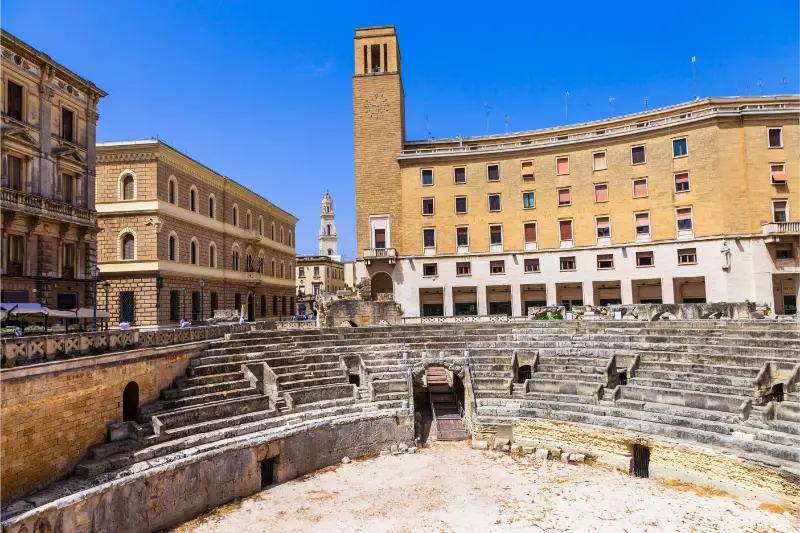
Golden stone glowing in the afternoon sun, extravagant Baroque façades, Roman ruins appearing unexpectedly between cafés and shops, and narrow streets made for slow wandering: Lecce is one of the most beautiful cities in Puglia and one of the best places to experience the atmosphere of southern Italy.
Often nicknamed the “Florence of the South”, Lecce is the cultural heart of Salento. Its historic centre combines ancient Roman remains with an extraordinary concentration of Baroque architecture, much of it carved from the pale local limestone known as pietra leccese.
But Lecce is much more than churches and ornate palaces. It is a lively city filled with outdoor cafés, traditional bakeries, artisan workshops and restaurants where you can discover some of Salento’s most characteristic dishes.
Unlike destinations that feel like open-air museums once the day visitors leave, Lecce remains wonderfully alive in the evening.
If you are planning a trip through Puglia, I recommend spending at least one full day in Lecce. Two nights are even better if you want to enjoy its food, evening atmosphere and slower southern Italian rhythm.
In this Lecce travel guide, you will discover the best things to do in Lecce, what to see, what to eat, where to stay, how to get there and the best day trips from the city.
Why Visit Lecce?
Lecce is one of those places where the city itself is the main attraction.
You do not need to rush from one monument to another. Much of the pleasure comes from walking through the old town and noticing the details: carved balconies, strange stone figures hidden among church decorations, small courtyards, elegant doorways and façades that change colour as the light changes throughout the day.
The softness of the local Lecce stone allowed craftsmen to create exceptionally elaborate decorations, giving rise to the distinctive architectural style known as Baroque Leccese.
The Basilica di Santa Croce is probably its most spectacular expression, but beautiful examples can be found almost everywhere in the historic centre.
Lecce is also an excellent base for discovering Salento and southern Puglia. Otranto, Gallipoli, Galatina, Porto Cesareo and some of the region’s most beautiful beaches are all within reach.

Best Things to Do in Lecce
1. Start in Piazza Sant’Oronzo
If this is your first visit to Lecce, Piazza Sant’Oronzo is the perfect place to start.
This large and lively square brings together several different periods of the city’s history. Ancient Roman ruins sit beside later buildings, cafés and the column dedicated to Sant’Oronzo, the patron saint of Lecce.
The most striking feature is the Roman Amphitheatre, part of which is visible directly from the square. Much of the ancient structure remains hidden beneath the modern city.
Rather than simply taking a photograph and moving on, spend some time walking around the square. It is one of the best places to understand what makes Lecce special: Roman history, Baroque architecture and everyday city life all sharing the same space.
My tip: return to Piazza Sant’Oronzo after sunset. During the day it is one of the main sightseeing areas; in the evening it becomes a lively meeting point for locals and visitors.
2. Admire the Basilica di Santa Croce
If you visit only one Baroque church in Lecce, make it the Basilica di Santa Croce.
Its extraordinary façade is covered with columns, animals, human figures, floral decorations and elaborate stone carvings. It is one of the greatest examples of Baroque architecture in Puglia.
The best way to appreciate Santa Croce is to look at it from different distances. First stand across the street and take in the entire façade, then move closer and study the individual details.
The longer you look, the more you notice.
Right next to the basilica stands the elegant Palazzo dei Celestini, making this one of the most impressive architectural corners of Lecce.
3. Walk into Piazza del Duomo
Few squares in Puglia make an entrance quite like Piazza del Duomo.

You approach through the narrow streets of the historic centre and suddenly enter a spectacular enclosed Baroque space dominated by Lecce Cathedral and its tall bell tower.
The square also includes the Bishop’s Palace and the former Seminary, creating an architectural ensemble that feels almost theatrical.
Visit during the day to appreciate the architecture, but if you are staying overnight, come back after sunset. The illuminated limestone gives the square a completely different atmosphere.
4. Visit Lecce Cathedral
The Cathedral of Lecce, dedicated to the Assumption of the Virgin Mary, is another essential stop in the city.
Its architecture forms part of the extraordinary Baroque composition of Piazza del Duomo, while the bell tower rises high above Lecce’s relatively low skyline.
If access to the bell tower is available during your visit, it is worth considering for a different perspective over the rooftops of the historic centre.
5. Wander Through the Historic Centre
After visiting the main monuments, put your map away for a while.
Lecce rewards aimless wandering.
Walk along streets such as Via Vittorio Emanuele II, Via Palmieri and Via Giuseppe Libertini, but also explore the smaller side streets whenever something catches your eye.
You will find quiet courtyards, small churches, artisan workshops and historic palazzi that rarely appear in lists of the top attractions in Lecce.
This is also where you notice how much the colour of the city changes during the day. In the morning, Lecce stone can appear almost creamy white. Around sunset, the same buildings take on much warmer golden tones.

Do not schedule every minute of your visit. Leave at least an hour simply to explore.
6. See the Church of Santa Chiara
Close to the Roman Theatre, the Church of Santa Chiara is another beautiful example of Lecce’s Baroque heritage.
It is smaller than Santa Croce, which makes it easier to concentrate on the decorative details without being overwhelmed by the scale of the architecture.
7. Discover the Church of San Matteo
The Church of San Matteo is another worthwhile stop, particularly if you are interested in Baroque architecture.
Its curved façade gives it a distinctive appearance compared with many of Lecce’s other churches.
Santa Croce, the Cathedral, Santa Chiara and San Matteo are all located within the compact historic centre, so you can easily combine them during the same walking itinerary.
8. Find the Roman Theatre
The amphitheatre in Piazza Sant’Oronzo is not Lecce’s only important Roman site.
Hidden among the buildings of the old town is the Roman Theatre, a smaller and more intimate archaeological site.
Unlike the amphitheatre, which stands beside one of Lecce’s busiest squares, the theatre feels almost hidden inside the modern city.
It perfectly illustrates one of the most fascinating aspects of Lecce: the modern city has literally grown around its ancient past.
9. Visit Castello Carlo V
Just outside the narrowest streets of the historic centre stands Castello Carlo V.
The fortress was developed during the 16th century under Emperor Charles V and formed part of the defensive system protecting the city.
Today the castle is also used for exhibitions and cultural events. It is a good addition if you have more than one day in Lecce or if you are particularly interested in military architecture.
10. Enter the Old Town Through Porta Napoli
Porta Napoli is one of the most impressive entrances to Lecce’s historic centre.
If possible, begin one of your walks here instead of heading directly to Piazza Sant’Oronzo.
Passing through the monumental gateway and gradually approaching the Baroque heart of Lecce gives you a much better sense of entering an old city.
From Porta Napoli you can easily continue toward Santa Croce, Piazza Sant’Oronzo and Piazza del Duomo.
11. Walk Through Porta San Biagio
On the southern side of the historic centre, Porta San Biagio provides another beautiful entrance to old Lecce.
It is particularly convenient if you are exploring the Roman Theatre, the Church of San Matteo and the streets in the southern part of the centre.
Walking between Porta Napoli and Porta San Biagio is also a good way to understand the scale of Lecce’s historic core.
12. Discover Museo Faggiano
For something very different from Lecce’s monumental churches, visit the Museo Faggiano.
This privately run archaeological museum occupies a historic building where excavations unexpectedly revealed layers of history spanning more than two thousand years.
You can see traces connected with different periods of the city’s past, including Roman and medieval Lecce.
It is one of the attractions I particularly recommend if you want to discover something beyond the city’s most famous monuments.
13. Look for Lecce’s Papier-Mâché Workshops
Architecture may dominate most photographs of Lecce, but the city also has a strong artisan tradition.
As you walk through the historic centre, look for workshops displaying cartapesta, the traditional papier-mâché figures for which Lecce is well known.
You may also find craftsmen working with pietra leccese, the soft local limestone responsible for much of the city’s distinctive appearance.
If you want to take home a souvenir, a small locally made artisan object is much more interesting than a generic tourist product.
What to Eat in Lecce
Food deserves an important place in any Lecce itinerary.
Salento has a strong culinary identity, and several local specialities are easy to try because they are available in cafés, bakeries and traditional restaurants throughout the city.
Pasticciotto
Start with Lecce’s most famous sweet speciality.
A pasticciotto leccese is a small pastry traditionally made with shortcrust pastry and filled with custard.
It is perfect for breakfast with coffee, although it is difficult to resist eating another one later in the day.
Rustico Leccese
For something savoury, try a rustico leccese.
It is made with puff pastry and traditionally filled with tomato, mozzarella and béchamel.
It may look like a simple bakery snack, but it is filling, inexpensive and one of the foods most closely associated with Lecce.
Ciceri e Tria
For a more substantial meal, look for ciceri e tria, one of Salento’s traditional pasta dishes.
It combines chickpeas with pasta, traditionally including some fried pieces that give the dish its distinctive texture.
Caffè Leccese
On a hot afternoon, order a caffè leccese.
The classic combination of coffee, ice and almond milk is particularly refreshing during the hottest months of the year.
Where to Stay in Lecce
For a first visit, I recommend choosing accommodation inside or immediately around the historic centre.
This allows you to walk to all the main attractions and, just as importantly, enjoy Lecce after many day visitors have left.
Historic Centre
Best for: first-time visitors, atmosphere and sightseeing.
You will be close to Piazza Sant’Oronzo, Santa Croce, Piazza del Duomo and most of the city’s main restaurants and cafés.
The main disadvantage is parking and vehicle access if you are travelling by car.
Near Porta Napoli
Best for: combining historic atmosphere with easier access to the edge of the old town.
This area keeps you within easy walking distance of the main attractions without necessarily staying in the narrowest part of the historic centre.
Near Lecce Railway Station
Best for: travellers exploring Puglia without a car.
The railway station is within walking distance of the historic centre and makes day trips by train easier.
To compare accommodation options, you can browse hotels and apartments in Puglia on Booking.com.
How Many Days Do You Need in Lecce?
One Day in Lecce
One full day is enough to see the most important attractions, including Piazza Sant’Oronzo, Santa Croce, Piazza del Duomo, Lecce Cathedral, the Roman Theatre and some of the historic centre.
If possible, stay until the evening rather than leaving immediately after sightseeing.
Two Days in Lecce
Two days is my preferred amount of time.
Use the first day for the main monuments and the second for Museo Faggiano, Castello Carlo V, artisan workshops, traditional food and slower exploration.
Three or More Days
With three or more days, Lecce becomes an excellent base for discovering Salento.
You can keep the same accommodation and make day trips to the coast and nearby towns instead of changing hotels every night.
One-Day Lecce Itinerary
Morning
Start the day with a pasticciotto and coffee.
Enter the historic centre through Porta Napoli and walk toward the Basilica di Santa Croce.
Continue to Piazza Sant’Oronzo to see the Roman Amphitheatre.
Late Morning
Walk toward Piazza del Duomo and visit Lecce Cathedral.
If the bell tower is open and you enjoy panoramic views, consider adding it to your visit.
Lunch
Stop for something typically Salentine.
A rustico leccese is perfect for a quick lunch, while a traditional trattoria is a better option if you want to sit down and try dishes such as ciceri e tria.
Afternoon
Continue toward Santa Chiara, the Roman Theatre, San Matteo and Museo Faggiano.
You can finish the afternoon around Porta San Biagio.
Evening
Return to the historic centre without following a strict itinerary.
Have an aperitivo, walk through Piazza Sant’Oronzo again and stay for dinner.
In Lecce, the evening should be considered part of the sightseeing experience rather than simply the end of the day.
Best Day Trips from Lecce
Otranto
Choose Otranto if you want to combine history with beautiful Adriatic scenery.
Its historic centre, cathedral, castle and seafront make it one of the best excursions from Lecce.
Gallipoli
Head west to Gallipoli for a combination of historic streets and the Ionian coast.
It has a very different atmosphere from Lecce and becomes particularly lively during summer.
Galatina
Often overlooked by first-time visitors, Galatina is an excellent choice if you are interested in architecture, religious history and traditional food.
Porto Cesareo
For a beach day, Porto Cesareo is one of the best-known destinations on the Ionian coast of Salento.
Santa Maria di Leuca
At the southern end of the Salento peninsula, Santa Maria di Leuca is a longer excursion but works very well as part of a road trip through southern Puglia.
How to Get to Lecce
By Plane
The most convenient airport for Lecce is generally Brindisi Airport, which is the closest major airport serving southern Puglia.
Bari Airport is another useful option, especially if Lecce is only one stop on a longer itinerary through Puglia.
By Train
Lecce is one of the easier destinations in Puglia to visit without a car.
Regular train services connect Lecce with cities including Brindisi, Bari and other destinations along the Adriatic side of Puglia.
Always check the timetable for your actual travel date, as journey times and services can change.
By Car
A car is not necessary for exploring central Lecce.
Once you arrive, walking is by far the best way to experience the historic centre.
A car becomes much more useful if you plan to use Lecce as a base for exploring beaches, rural areas and smaller towns around Salento.
Be careful when approaching the historic centre because some streets are subject to ZTL restricted traffic regulations. If your hotel is inside the old town, ask the property about access and parking before driving into the centre.
If you need a car for a wider Puglia itinerary, you can compare car rental prices with DiscoverCars.
Getting Around Lecce
Once you reach the historic centre, walk whenever possible.
The distances between Lecce’s main attractions are relatively short, and much of the charm of the city lies in the streets connecting them.
Comfortable shoes are important because you will spend a large part of the day walking over stone streets.
During July and August, the heat can be intense. Visit outdoor attractions in the morning and late afternoon and consider taking a longer lunch or hotel break during the hottest hours.
Best Time to Visit Lecce
April to June
Spring and early summer are among the best periods for sightseeing in Lecce.
The city is lively, the days are long and walking around the historic centre is generally more comfortable than during the hottest part of summer.
July and August
Summer is the liveliest period but also the hottest and busiest.
If you visit during these months, change your daily rhythm rather than trying to sightsee continuously through the middle of the day.
Go out early, slow down after lunch and return to the streets in the late afternoon and evening.
Festa di Sant’Oronzo
One of the most atmospheric periods to visit Lecce is around August 24 to 26, when the city celebrates its patron saint, Sant’Oronzo.
The festivities traditionally bring religious celebrations, illuminated streets, music and events to the city centre.
September and October
Early autumn is another excellent choice, especially if you want warm weather combined with a slightly calmer atmosphere.
Winter
Lecce is a genuine city rather than a seasonal beach resort, so it remains interesting during winter.
This period is especially suitable for travellers interested in architecture, churches, museums and traditional food.
Is Lecce Worth Visiting?
Absolutely.
If you are interested in architecture, history, food or simply beautiful Italian cities, Lecce deserves a place on your Puglia itinerary.
What makes the city particularly attractive is not simply the number of monuments but the way everything fits together.
You can begin beside a Roman amphitheatre, walk a few minutes past Baroque churches carved from golden limestone, stop for a pasticciotto, discover archaeological remains hidden inside an old building and finish the day with dinner in streets that have been used for centuries.
Lecce feels historic without feeling frozen in time.
Practical Tips for Visiting Lecce
- Stay at least one night. Lecce is beautiful as a day trip, but the atmosphere after sunset is one of the best reasons to stay.
- Walk whenever possible. The historic centre is compact and many of the best discoveries happen between the main attractions.
- Do not drive blindly into the old town. Check ZTL restrictions and parking arrangements before arriving.
- Slow down at Santa Croce. This is a façade designed to be studied rather than simply photographed.
- Try local food. Pasticciotto, rustico leccese, ciceri e tria and caffè leccese are a great introduction to Salento cuisine.
- Leave some free time. A completely packed itinerary works against the character of Lecce.
Frequently Asked Questions About Lecce
What is Lecce famous for?
Lecce is famous for its Baroque architecture, golden-coloured Lecce stone, Basilica di Santa Croce, Piazza del Duomo and Roman archaeological remains.
Is Lecce worth visiting?
Yes. Lecce is one of Puglia’s most important cultural cities and combines architecture, archaeology, traditional food and a lively historic centre in a relatively compact area.
How long should I spend in Lecce?
One full day is enough to see the main attractions, but two nights provide a much better experience and allow you to enjoy the city after dark.
Can you visit Lecce without a car?
Yes. Lecce is very suitable for a car-free visit because the historic centre is walkable and the railway station provides useful connections with other destinations in Puglia.
What is the nearest airport to Lecce?
Brindisi Airport is generally the most convenient airport for Lecce and southern Salento.
If you are flying to Puglia, compare flights to Bari and Brindisi with Skyscanner.
What food should I try in Lecce?
Try pasticciotto, rustico leccese, ciceri e tria and caffè leccese.
What are the must-see attractions in Lecce?
For a first visit, prioritise the Basilica di Santa Croce, Piazza del Duomo, Piazza Sant’Oronzo, the Roman Amphitheatre and the historic centre.
Is Lecce a good base for exploring Salento?
Yes. Lecce is an excellent base for visiting Otranto, Gallipoli, Galatina, Porto Cesareo and other towns and beaches across Salento.
Is Lecce walkable?
Yes. Most of the main attractions in the historic centre are close enough to visit comfortably on foot.
When is the best time to visit Lecce?
Spring and early autumn are particularly good for sightseeing. Summer is ideal if you also want to enjoy the beaches and evening atmosphere of Salento, although daytime temperatures can be high.
Final Thoughts
Lecce is not a city that needs dozens of headline attractions to justify a visit.
Its real strength lies in the atmosphere created by everything together: Roman ruins, extravagant Baroque stonework, quiet courtyards, artisan traditions, busy cafés and some of Salento’s most recognisable food.
See Santa Croce and Piazza del Duomo, of course, but also allow yourself to get slightly lost.
Walk down a street simply because the light looks beautiful at the other end. Stop for a cold caffè leccese. Look through the door of an artisan workshop. Come back to the same square after sunset.
That is when Lecce begins to feel less like another stop on a Puglia itinerary and more like one of the places you will remember after the trip is over.
Book Your Trip to Lecce
Looking for accommodation? Compare hotels and apartments in Puglia on Booking.com.
Planning to explore Salento by car? Compare rental car prices with DiscoverCars.
For guided tours and local experiences, you can browse tours and activities on GetYourGuide.
This page may contain affiliate links. If you make a booking through one of these links, we may receive a small commission at no additional cost to you.