
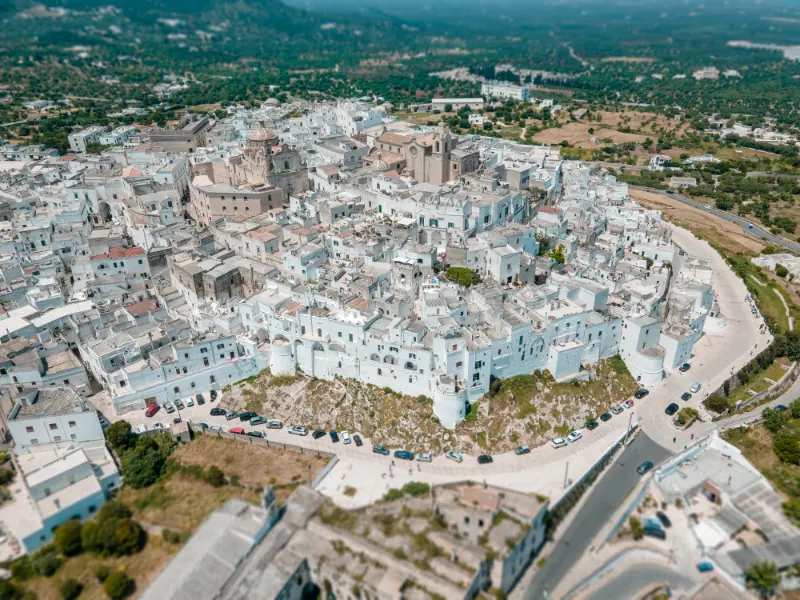
There are towns in Puglia that impress you with a famous monument, and others that win you over with their atmosphere. Ostuni belongs firmly to the second group.
From a distance, its historic centre looks like a bright white crown rising above a landscape of olive groves, with the blue Adriatic visible on the horizon. Once you enter the old town, the experience changes completely: narrow lanes twist between whitewashed houses, stone staircases appear unexpectedly, small arches connect ancient buildings and panoramic terraces open onto the surrounding countryside.
Known throughout Italy as La Città Bianca – the White City, Ostuni is one of the most recognisable towns in Puglia and one of the places I would recommend including on a first trip to the region.
The old town is compact enough to explore in a day, but Ostuni deserves more than a quick photo stop. Stay until sunset, have dinner among the whitewashed alleys and, if your itinerary allows it, use the town as a base for exploring the Valle d’Itria, the Adriatic coast and the countryside dotted with traditional masserie.
Why Is Ostuni Called the White City?
The answer becomes obvious before you even reach the historic centre.
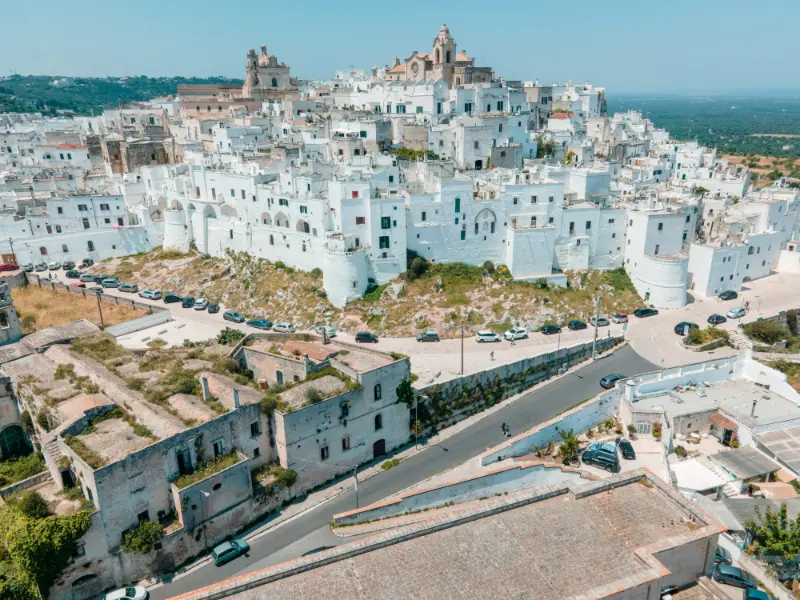
The oldest part of Ostuni is almost completely covered in white limewash, creating the dazzling appearance that gave the town its famous nickname.
Whitewashing houses was common in many Mediterranean towns. Lime was inexpensive, reflected the strong summer sunlight and was traditionally appreciated for its hygienic properties. Over the centuries, this practice became one of Ostuni’s most distinctive features.
Today, the contrast between the white houses, blue sky, warm stone and green olive trees creates one of the most beautiful urban landscapes in Puglia.
However, Ostuni is much more than a photogenic destination. Behind those white walls lies a town with a long history, medieval streets, churches, defensive walls and important archaeological discoveries.
Best Things to See and Do in Ostuni
For bookable tours and activities, check current experiences on GetYourGuide.
1. Start in Piazza della Libertà
For most visitors, Piazza della Libertà is the natural starting point for exploring Ostuni.
The square sits just below the historic centre and marks the transition between the newer part of town and the maze of white alleys climbing towards the cathedral.
It is dominated by the impressive Column of Sant’Oronzo, dedicated to the patron saint of Ostuni. Nearby you will also find the Church of San Francesco and the Palazzo Municipale.
Cafés, bars and restaurants make the square one of the liveliest meeting places in town, especially in the evening.
Travel tip: explore the historic centre first and return to Piazza della Libertà later in the afternoon for an aperitivo. The atmosphere becomes much more lively as sunset approaches.
2. See the Column of Sant’Oronzo
Standing in the centre of Piazza della Libertà, the Colonna di Sant’Oronzo is one of the symbols of Ostuni.
The richly decorated column is dedicated to the town’s patron saint and is one of the landmarks you are almost certain to pass several times during your visit.
If you are in Ostuni towards the end of August, you may also experience the celebrations dedicated to Sant’Oronzo, one of the most important traditional events in the town.
3. Visit the Church of San Francesco d’Assisi
Overlooking Piazza della Libertà, the Church of San Francesco d’Assisi is worth a quick visit before climbing towards the historic centre.
It is easy to walk past it while focusing on the white old town above, but if the church is open, step inside and take a few minutes to appreciate its interior.
4. Walk Along Via Cattedrale
From Piazza della Libertà, start walking uphill towards the heart of the White City.
Via Cattedrale is the main route leading towards Ostuni Cathedral and one of the busiest streets in the historic centre.
Restaurants, small shops and local boutiques line the street, but don’t spend the entire visit following the main road.
One of the best things to do in Ostuni is simply turn into the smaller alleys whenever something catches your attention.
A staircase may lead to a quiet residential corner, while another narrow passage can unexpectedly open onto a panoramic view across the olive groves.
My advice is simple: walk up Via Cattedrale towards the cathedral, but choose a completely different route when heading back down. Ostuni becomes much more interesting once you move away from the main pedestrian street.
5. Visit Ostuni Cathedral
At the highest point of the historic centre stands one of the town’s most important monuments: the Cathedral of Santa Maria Assunta.
The cathedral dates mainly from the 15th century and is one of the architectural highlights of Ostuni.
Its façade is particularly beautiful, with an impressive central rose window and decorative stone details that create a striking contrast with the simpler whitewashed buildings surrounding it.
Even if churches are not normally the focus of your travels, the cathedral deserves a stop.
The approach is part of the experience: after walking uphill through a maze of narrow streets, the space suddenly opens and the cathedral appears in front of you.
Opening times can vary, particularly when religious services are taking place, so check locally before planning your visit.
6. Walk Under Arco Scoppa
Beside the cathedral you will find one of the most photographed architectural details in Ostuni: Arco Scoppa.
The elegant stone arch connects two historic buildings and stands out beautifully against the surrounding white façades.
This part of town becomes busy during summer, so photographers should consider arriving early in the morning.
Don’t stop at the arch itself. Walk underneath it and explore the narrow streets behind it, where some of the most atmospheric corners of Ostuni can be found.
7. Get Lost in the Whitewashed Alleys
No single monument explains Ostuni as well as its streets do.
The real attraction is the historic centre itself.
- Whitewashed houses
- Stone staircases
- Hidden courtyards
- Flower-filled balconies
- Small religious shrines
- Colourful doors
- Stone arches
- Panoramic terraces
- Tiny restaurants hidden inside old buildings
Some streets are lively and photogenic, while others remain surprisingly quiet and residential.
If your itinerary gives you only two hours in Ostuni, you can technically see the main landmarks. But the town is much more rewarding when you have time to wander without constantly checking the map.
8. Find Ostuni’s Famous Blue Door
Among the whitewashed buildings, one splash of colour has become particularly famous: the Porta Blu, or Blue Door.
The vivid blue entrance set against a completely white façade has become one of the most popular photo spots in Ostuni.
It is worth seeing, but don’t make the mistake of focusing only on this one place. Throughout the historic centre you will find many beautiful blue, green and wooden doors that are often much quieter and just as photogenic.
9. Walk Along the Old Defensive Walls
Parts of Ostuni’s historic defensive walls still surround the old town.
Walking around the outer edge of the historic centre gives you a completely different perspective of the White City.
Instead of narrow streets and enclosed courtyards, the landscape suddenly opens towards the countryside and the coast.
From several points you can admire the immense plain of olive trees stretching towards the Adriatic Sea.
10. Stop at a Panoramic Viewpoint
Ostuni’s elevated position is one of the reasons the town is so special.
Several viewpoints around the old town overlook the Piana degli Ulivi, the vast olive-growing countryside between Ostuni and the Adriatic coast.
The view is particularly beautiful in the late afternoon when the sunlight becomes softer and the landscape takes on warmer colours.
If you enjoy photography, avoid limiting your visit to the middle of the day. The strong summer sun reflecting from the white walls can create very harsh contrasts.
Visit the Museum of Pre-Classical Civilizations
If you want to understand just how ancient the history of this area is, visit the Museum of Pre-Classical Civilizations of Southern Murgia.
One of its most important archaeological discoveries is associated with a prehistoric woman found near Ostuni, popularly known as the Woman of Ostuni.
The remains, discovered at the archaeological site of Santa Maria di Agnano, date back around 28,000 years and represent one of the most fascinating archaeological stories connected with the town.
The museum is also a good option during the hottest part of a summer afternoon when walking through the exposed streets becomes tiring.
Experience Ostuni at Sunset
If possible, don’t leave Ostuni too early in the afternoon.
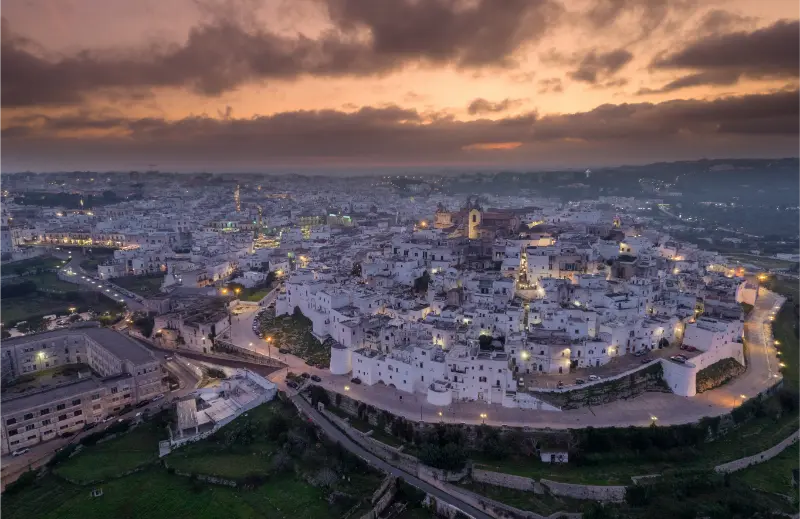
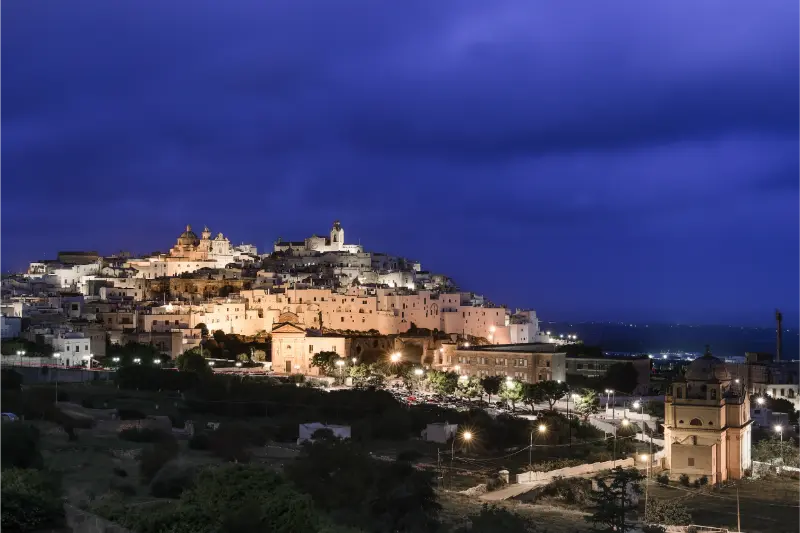
The town becomes particularly beautiful in the hours before sunset.
The bright white buildings take on softer tones, restaurants begin setting tables outside and the countryside surrounding the town turns golden.
This is also the perfect moment for a walk around the panoramic side of the historic centre.
Then stay for dinner.
A day trip to Ostuni is easy to organise, but spending at least one night here allows you to experience something many visitors miss: the White City after the daytime crowds begin to disappear.
What to Eat in Ostuni
Food is one of the great pleasures of travelling through Puglia, and Ostuni is an excellent place to discover local cuisine.
Orecchiette
Puglia’s most famous pasta is available throughout Ostuni. One of the classic versions is orecchiette con le cime di rapa, although seasonal ingredients mean the sauces offered by restaurants can vary throughout the year.
Fave e cicorie
A simple traditional dish made with puréed broad beans and bitter greens. It is one of those recipes that demonstrates how Puglian cuisine can create excellent food from very simple ingredients.
Burrata and local cheeses
Fresh local cheeses are perfect for a light lunch or antipasto, especially during the warmer months.
Bombette
These small rolls of meat are particularly associated with the Valle d’Itria and are worth trying if you are exploring Ostuni and the surrounding towns.
Fresh seafood
Although Ostuni itself sits on a hill inland, the Adriatic coast is only a short distance away, so fish and seafood feature prominently on many local menus.
Extra-Virgin Olive Oil
This is one product you should pay special attention to.
The countryside around Ostuni contains thousands of olive trees, including spectacular centuries-old specimens. If you have time, visiting a local masseria or olive-oil producer can be one of the most interesting food experiences in the area.
Best Beaches Near Ostuni
One of the advantages of staying in Ostuni is that you can easily combine the White City with the Adriatic coast.
The historic centre is not directly on the sea, but several attractive beaches and coves can be reached by car.
Pilone
Pilone is one of the best-known coastal areas near Ostuni, with sandy stretches, clear water and Mediterranean vegetation.
It is a good option for combining a morning exploring Ostuni with an afternoon at the beach.
Torre Pozzelle
For a more natural coastal landscape, consider Torre Pozzelle.
The coastline here alternates between rocky areas and small coves, creating a wilder atmosphere than a long, organised beach.
Coastal Dunes Regional Natural Park
Nature lovers should also explore the Parco Naturale Regionale Dune Costiere da Torre Canne a Torre San Leonardo.
This protected landscape combines dunes, Mediterranean vegetation, wetlands, farmland and ancient olive groves.
It perfectly demonstrates how varied the area around Ostuni can be: within a short distance you can move from a medieval hill town to olive groves and then to the Adriatic Sea.
How Long Do You Need in Ostuni?
Half a Day
Half a day is enough to see Piazza della Libertà, walk through the historic centre, visit the cathedral, see Arco Scoppa and stop at one or two panoramic viewpoints.
This works if Ostuni is one stop on a busy Valle d’Itria road trip.
One Full Day
One full day is the best choice for most first-time visitors.
You will have enough time to explore slowly, visit the museum, enjoy lunch, stop for an aperitivo and see the town during the beautiful late-afternoon light.
One or Two Nights
Stay longer if you want to use Ostuni as a base for exploring nearby beaches, masserie, olive groves and the towns of the Valle d’Itria.
A Perfect One-Day Ostuni Itinerary
Morning
Arrive early, particularly between June and September.
Start in Piazza della Libertà, see the Column of Sant’Oronzo and the Church of San Francesco, then begin walking towards the historic centre.
Follow Via Cattedrale uphill while exploring a few side streets along the way.
Late Morning
Reach Ostuni Cathedral and Arco Scoppa, then spend some time wandering through the upper part of the old town.
Lunch
Choose a local trattoria and try a few traditional Puglian dishes.
In July and August, a relaxed lunch can also be a good way to avoid walking during the hottest part of the day.
Afternoon
Visit the Museum of Pre-Classical Civilizations or continue exploring the quieter alleys around the historic centre.
Late Afternoon and Sunset
Walk along the outer edge of the old town and stop at a viewpoint overlooking the olive groves.
Finish the day with an aperitivo around Piazza della Libertà before returning to the historic centre for dinner.
Best Time to Visit Ostuni
April to June
This is one of the best periods to visit Ostuni.
The weather is generally pleasant for sightseeing, the countryside is green and visitor numbers are lower than during the peak summer months.
May and June are particularly good months if exploring towns is more important to you than spending every day at the beach.
July and August
These are the hottest and busiest months.
Ostuni becomes extremely lively, particularly in the evening. If you visit during this period, arrive early, avoid long walks during the hottest afternoon hours and stay until sunset.
September and October
September is another excellent month because the weather can remain warm enough for the coast while crowds begin to decrease.
Early October can also be very pleasant for sightseeing.
Winter
Ostuni is much quieter during winter.
Some tourist businesses operate reduced hours, but the old town can feel more authentic and relaxed than during the summer season.
How to Get to Ostuni
If you are flying to Puglia, compare flights to Bari and Brindisi with Skyscanner.
By Car
A car is the easiest option if Ostuni is part of a wider Puglia road trip.
It is especially useful if you want to explore beaches, masserie, olive groves and smaller villages in the surrounding countryside.
Do not assume you can drive directly into the historic centre. Ostuni has restricted traffic areas, so always follow local ZTL signs and leave your car in an authorised parking area outside the old town.
If you plan to drive, compare rental-car prices with DiscoverCars.
By Train
Ostuni is also reachable by train, making it possible to visit without renting a car.
The important thing to know is that Ostuni railway station is located several kilometres from the historic centre.
Bus and taxi connections are normally available between the station and the town, but always check the latest timetable for the day of your journey.
From Brindisi Airport
Brindisi Airport is the closest major airport and one of the most convenient gateways to Ostuni.
Renting a car is particularly useful if you plan to explore several destinations in southern and central Puglia.
From Bari Airport
Bari Airport is another good option, particularly if your itinerary also includes Bari, Polignano a Mare and Monopoli.
A very enjoyable route through this part of Puglia is:
Bari → Polignano a Mare → Monopoli → Ostuni
Parking and ZTL in Ostuni
This is one of the most important practical things to know before arriving by car.
Do not try to drive into the historic centre unless you are certain you are authorised to do so.
Ostuni has restricted traffic areas and access rules can change depending on the season and time of day.
When arriving by car:
- Follow official parking signs.
- Leave your car outside the historic centre.
- Check whether parking spaces are free or paid.
- Read road signs carefully.
- Never follow your navigation app blindly into a restricted street.
Once you have parked, walking is by far the best way to explore Ostuni.
Comfortable shoes are highly recommended because the old town has steep lanes, stairs and polished stone surfaces.
Where to Stay in Ostuni
For current accommodation options, compare hotels and apartments on Booking.com.
Historic Centre
Stay inside the historic centre if atmosphere is your priority.
You will be able to step outside your accommodation and immediately find yourself among the white streets, restaurants and viewpoints.
Best for: couples, short breaks and first-time visitors.
The main disadvantages are parking and carrying luggage through narrow streets and staircases.
Just Outside the Historic Centre
This can be the most practical choice if you are travelling by car.
You can still walk to the main attractions while having easier access to parking and major roads.
Best for: road trips and travellers with a rental car.
Countryside and Masserie
For a completely different experience, stay in one of the masserie surrounding Ostuni.
These traditional rural estates are among the most characteristic places to stay in Puglia.
Many are surrounded by olive groves and offer swimming pools, traditional food and beautifully restored historic buildings.
Best for: romantic trips, relaxing holidays and travellers with a car.
Near the Coast
If the beach is your priority, consider staying closer to the coast and visiting Ostuni in the late afternoon or evening.
This can be an excellent solution during July and August.
Best Day Trips from Ostuni
Cisternino
Cisternino is one of the most charming towns in the Valle d’Itria and is particularly enjoyable in the evening.
It is also famous for the local tradition of butcher shops where customers can select meat that is then cooked on the spot.
Locorotondo
Locorotondo is another beautiful white hill town, known for its circular historic centre and panoramic views over the Valle d’Itria.
It can easily be combined with Cisternino.
Alberobello
Home to Puglia’s iconic trulli, Alberobello is one of the region’s most famous destinations.
Visit early in the morning if you want to explore before the busiest part of the day.
Monopoli
Monopoli combines a beautiful historic centre, old harbour and beaches.
It is one of the easiest destinations to combine with Ostuni during a road trip along the Adriatic coast.
Polignano a Mare
Polignano a Mare is famous for its dramatic cliffs, sea views and the iconic Lama Monachile beach.
For a coastal day trip you could follow:
Ostuni → Monopoli → Polignano a Mare
For a Valle d’Itria itinerary, a good route is:
Ostuni → Cisternino → Locorotondo → Alberobello
Try not to visit too many towns in one day. Distances may appear short on the map, but slowing down is one of the best ways to enjoy Puglia.
Is Ostuni Worth Visiting?
Yes, Ostuni is absolutely worth visiting.
Its appeal goes far beyond the famous white houses.
In a relatively small area you can experience medieval architecture, panoramic views, local food, archaeological history, traditional masserie, ancient olive groves and easy access to the Adriatic coast.
If you only have a short time, allow at least half a day.
If possible, stay until evening.
And if your Puglia itinerary allows it, spending one or two nights in Ostuni gives you the opportunity to enjoy the town after many day visitors have left.
Useful Ostuni Travel Tips
- Arrive early in summer. The historic centre becomes much busier later in the day.
- Wear comfortable shoes. Expect steep streets, stone steps and uneven surfaces.
- Watch for ZTL signs. Do not drive into restricted areas unless authorised.
- Stay until sunset. The late-afternoon light is one of the highlights of Ostuni.
- Explore beyond Via Cattedrale. Many of the most beautiful streets are away from the main pedestrian route.
- Stay for dinner. The White City has a completely different atmosphere in the evening.
- Combine Ostuni with the coast. During summer, sightseeing in the morning and beach time in the afternoon works very well.
- Check attraction opening hours. Churches and museums may have seasonal schedules.
- Don’t over-plan your walk. Getting slightly lost is part of the experience.
Frequently Asked Questions About Ostuni
What is Ostuni famous for?
Ostuni is famous for its whitewashed historic centre, which has earned it the nickname La Città Bianca, or the White City. It is also known for its cathedral, ancient olive groves, masserie and proximity to the Adriatic coast.
How much time do you need in Ostuni?
Allow at least half a day, although one full day is ideal for most visitors. Staying overnight allows you to enjoy the historic centre after sunset.
Can you visit Ostuni without a car?
Yes. Ostuni can be reached by train, although the railway station is outside the historic centre and you will need a bus or taxi to reach the town.
A car becomes much more useful if you plan to visit beaches, masserie and several smaller towns in the surrounding countryside.
Is Ostuni walkable?
Yes. The historic centre is compact and best explored entirely on foot.
However, be prepared for steep streets, stairs and uneven stone surfaces.
Is Ostuni good for families?
Yes, although families travelling with small children should be prepared for stairs and steep streets. A lightweight stroller is usually more practical than a large one inside the historic centre.
Does Ostuni have beaches?
Yes. The historic centre itself is inland, but Ostuni’s municipal territory extends towards the Adriatic coast and includes several beaches and coves such as Pilone and Torre Pozzelle.
What is the best month to visit Ostuni?
For sightseeing, May, June, September and early October offer an excellent balance between pleasant weather and visitor numbers.
July and August are better if you also want beach weather and lively summer evenings, but expect higher temperatures and more visitors.
Is Ostuni better during the day or at night?
Both are worth experiencing.
During the day, the brilliant white architecture is at its most impressive. In the evening, the light becomes softer, restaurants fill with visitors and the narrow alleys become particularly atmospheric.
Final Thoughts: Why Ostuni Belongs on Your Puglia Itinerary
Ostuni may be one of the most photographed towns in Puglia, but photographs only tell part of the story.
The experience is hidden in the details: the sunlight reflecting from white walls, footsteps on polished stone, glimpses of the countryside between buildings, small restaurants hidden inside ancient houses and olive trees stretching towards the Adriatic.
See Piazza della Libertà, Ostuni Cathedral and Arco Scoppa, but leave some space in your itinerary for simply wandering.
Take an unexpected staircase. Follow a quiet alley. Stop at a panoramic viewpoint. Stay for sunset.
That is when Ostuni stops being just another beautiful place to photograph and becomes one of those destinations that really captures the spirit of a journey through Puglia.
Planning a longer trip through the region? Read our Puglia Travel Guide: Best Places to Visit, Things to Do & Travel Tips to discover more destinations and build your perfect Puglia itinerary.