

Martina Franca is one of the most rewarding towns in the Valle d’Itria because it offers something different from the trulli and whitewashed lanes that dominate many central-Puglia itineraries. Its historic centre is richer in Baroque detail, the town is large enough to feel lived in, and the countryside immediately outside the centre is still dotted with trulli, masserie and dry-stone walls.
It also works well as a practical base. Alberobello, Locorotondo and Cisternino are close enough for short drives, yet Martina Franca has a broader choice of restaurants, shops and evening life. If your Puglia itinerary risks becoming a sequence of tiny villages, this is the stop that adds architectural weight and a more urban rhythm.
How Long Do You Need in Martina Franca?
Allow three to four hours for the historic centre if you want to see the main streets, Basilica di San Martino and Palazzo Ducale without rushing. A full day is better if you include lunch, a museum or a countryside stop. Two nights make sense if you use Martina Franca as a base for the Valle d’Itria.
The Best Walking Route Through Martina Franca
The most efficient walk starts at Piazza XX Settembre. This broad square sits just outside the most atmospheric part of the old town and gives you a clear entrance through Arco di Santo Stefano. From there, the route naturally moves toward Palazzo Ducale, then through the historic streets to Piazza Plebiscito and the Basilica di San Martino.
Continue beyond the basilica into Via Cavour and the quieter side streets rather than turning back immediately. The palazzi, balconies and carved stone details are one of Martina Franca’s real strengths, and they are easier to appreciate away from the busiest central axis. Loop back toward Via Vittorio Emanuele and Piazza Maria Immacolata before returning to Piazza XX Settembre.
Best Things to Do in Martina Franca
For bookable tours and activities, check current experiences on GetYourGuide.
Piazza XX Settembre and Arco di Santo Stefano
Piazza XX Settembre is the practical starting point. The arch frames the transition between the modern town and the historic centre, and it is a useful meeting place if you are travelling with others. The tourist information point is also located here, which makes it a sensible place to check temporary openings or local events.
Do not spend too long in the square itself. The more distinctive Martina Franca begins as soon as you pass the arch.
Palazzo Ducale
Palazzo Ducale is directly connected to the town’s grander Baroque identity. The building faces Piazza Roma and contains decorated rooms, including spaces known for tempera cycles with mythological, biblical and Arcadian themes. If the interiors are open during your visit, allow roughly 45 to 60 minutes.
If you have very limited time, prioritise the basilica and the streets of the historic centre. Palazzo Ducale becomes more worthwhile when you have half a day or longer.
Basilica di San Martino and Piazza Plebiscito
The Basilica di San Martino is the architectural centrepiece of Martina Franca. Its pale Baroque façade dominates Piazza Plebiscito and works best as part of the surrounding urban scene rather than as an isolated monument. Give yourself time to look back at the façade from different points in the square before entering.
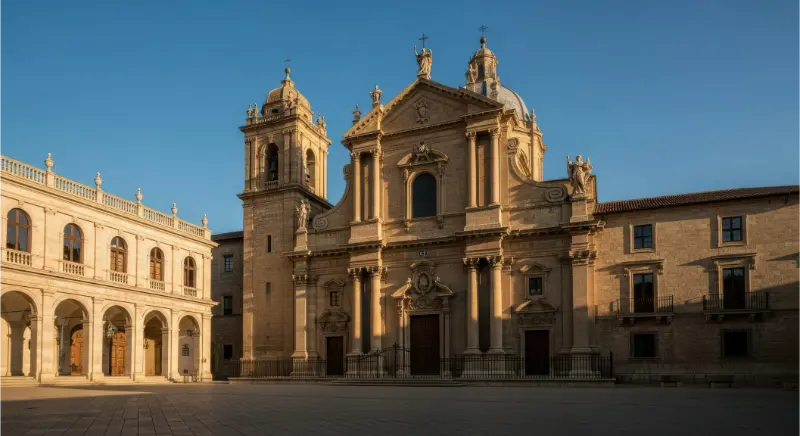
The area around Piazza Plebiscito and nearby Piazza Maria Immacolata becomes lively toward aperitivo time. If you visit at midday in summer, it can feel much flatter than it does in the early evening when shade returns to the narrow streets.
Via Cavour and Via Mazzini
These streets and the lanes branching from them are where a short visit becomes a better one. Martina Franca’s appeal lies in the sequence of noble façades, wrought-iron balconies, portals and small courtyards. You do not need to identify every palace; walk slowly and look upward.
This is also a good area to escape the most concentrated pedestrian flow around Piazza Plebiscito. Ten extra minutes here can be more satisfying than adding a minor church simply to complete a list.
Villa Comunale
The municipal gardens near the historic centre provide a useful pause, particularly in summer. They are not a reason to travel to Martina Franca on their own, but they can be valuable if you are visiting with children or need shade between sightseeing and lunch.
Where to Eat and What to Try
The product most strongly associated with Martina Franca is capocollo, a cured pork speciality with a distinctive local tradition. Try it as part of a restrained antipasto rather than ordering so many starters that you cannot enjoy the rest of the meal.
The historic centre has the greatest concentration of attractive restaurants, but not every table on the most photographed square offers the best value. Streets a short distance from Piazza Plebiscito can be calmer. Around lunch, look for places serving seasonal vegetables, local cheeses, handmade pasta and grilled meat rather than menus that try to represent every Puglian speciality at once.
If wine interests you, the countryside around Martina Franca and Locorotondo is worth exploring. Book tastings in advance during busy summer weeks because many wineries are working estates, not walk-in tourist attractions.
Parking in Martina Franca
Do not drive into the historic centre assuming you will find a space beside your restaurant. The old core is affected by traffic restrictions and is better treated as a pedestrian zone for visitors. Follow current ZTL signs and use parking outside the historic streets.
A particularly useful reference point is the multi-storey parking area at Piazza Mario Pagano. Municipal changes introduced in 2026 made the covered levels subject to paid-parking rules while uncovered areas remained free under the announced arrangement. Because local parking regulations can change, read the signs at the entrance on the day rather than relying on an old tariff copied online.
From the parking areas around the centre, the old town is close enough that walking is usually faster than repeatedly circling for a nearer space. In July and August, this is especially true in the evening.
How to Get to Martina Franca
If you are flying to Puglia, compare flights to Bari and Brindisi with Skyscanner.
By car
A car is the most flexible option if Martina Franca is part of a Valle d’Itria route. The roads from Locorotondo, Alberobello and Cisternino are relatively short, and the drive itself passes through the landscape that makes this area worth visiting.
If you need a rental car for a wider Puglia trip, compare options with DiscoverCars.
By public transport
Martina Franca is served by Ferrovie del Sud Est, but regional timetables and engineering works can change journey patterns. Check the current schedule before building a tight connection. Public transport is workable for reaching the town; it is less convenient if the same day also includes rural masserie and several hill towns.
Omio can help compare longer rail and bus segments when planning the journey into Puglia.
Best Time of Day to Visit
In summer, early morning and late afternoon are far more comfortable than the middle of the day. The historic centre is built for walking, and the Baroque stone looks better when the light is lower and the streets have more contrast.
If you are coming from Alberobello, a good pattern is to visit Alberobello early, have lunch in the countryside, then reach Martina Franca around 16:00 or 17:00. This avoids the harshest heat and positions you in the historic centre as the evening atmosphere begins.
Best Time of Year
May, June and September are excellent because you can combine town walks with the countryside comfortably. July and August are lively but hotter, and the centre becomes busier in the evenings. Winter is quieter but Martina Franca remains a real town rather than a purely seasonal resort, so it works better outside summer than many coastal bases.
The Festival della Valle d’Itria is the major cultural event associated with Martina Franca and brings opera and classical performances to the town in summer. If your dates overlap with the festival, check the official programme and book accommodation early.
Where to Stay in Martina Franca
Stay in or immediately beside the historic centre if restaurants and evening walks matter most. This is ideal for couples and travellers without a car, but check stairs, parking arrangements and luggage access before booking inside the old streets.
If you have a car and want a quieter stay, the countryside around Martina Franca is one of the best places in Puglia for a masseria or trullo. The trade-off is that dinner usually requires driving. A rural property that looks “close” on a map can still be several kilometres from Piazza Plebiscito.
Compare accommodation in Martina Franca.
Martina Franca with Children
The historic centre is manageable with children because the main sights are close together, but paving can be uneven and there are occasional steps. A stroller is possible on the principal streets; a lightweight model is easier in side lanes.
Do not plan a museum-heavy day. A short walk, the arch, the basilica, a gelato stop and time in the Villa Comunale can be enough before moving to a countryside activity or pool.
Accessibility
Martina Franca is less physically demanding than some steep coastal towns, but the old streets still include uneven stone, thresholds and limited vehicle access. Travellers with reduced mobility should confirm step-free access for museums and accommodation individually.
Best Day Trips from Martina Franca
Locorotondo
Locorotondo is the easiest pairing. Its white historic centre and panoramic edge contrast well with Martina Franca’s Baroque architecture. Allow around two hours.
Cisternino
Cisternino is best later in the day, especially if you plan to stay for grilled meat and the sunset view over the valley.
Alberobello
Visit early in the morning and then continue to Martina Franca. The two towns are close geographically but visually very different, which makes the combination stronger than visiting several trulli-focused places back to back.
Ostuni
Ostuni works as a half-day addition if you have a car. Because both towns become more atmospheric late in the day, avoid trying to see them both only at sunset; give one the evening and visit the other earlier.
One-Day Martina Franca and Valle d’Itria Itinerary
- 08:00: Alberobello before the main crowds.
- 10:45: short drive to Locorotondo and panoramic walk.
- 13:00: lunch in Locorotondo or countryside.
- 15:30: arrive in Martina Franca and park outside the historic core.
- 16:00–19:00: Piazza XX Settembre, Arco di Santo Stefano, Palazzo Ducale, Basilica di San Martino, Via Cavour and Via Mazzini.
- 19:00 onward: aperitivo and dinner in Martina Franca, or continue to Cisternino only if you still want another stop.
Is Martina Franca Worth Visiting?
Yes, especially if you are already travelling through the Valle d’Itria. It gives the region architectural variety and feels less dependent on one famous attraction than Alberobello. Travellers who enjoy streetscapes, food and elegant historic centres may prefer it to some of the smaller villages.
If you have only half a day for central Puglia and have never seen trulli, Alberobello should come first. If you have two days in the valley, Martina Franca belongs on the itinerary.
Frequently Asked Questions
What is Martina Franca famous for?
It is known for its Baroque historic centre, the Basilica di San Martino, Palazzo Ducale, capocollo and the summer Festival della Valle d’Itria.
How much time do you need?
Three to four hours covers the main historic centre. A full day allows for lunch, museum interiors and a slower walk.
Is Martina Franca better than Locorotondo?
They are different. Locorotondo is smaller, whiter and more immediately picturesque; Martina Franca has richer architecture, more services and more to occupy a longer visit.
Can you visit Martina Franca without a car?
Yes, but a car is more useful if you also want to explore masserie, wineries and several Valle d’Itria towns on the same day.
Where should you park?
Use parking outside the historic core and obey current ZTL signs. Piazza Mario Pagano is one useful municipal parking reference point, but always check the current charging rules on arrival.