

Five days in Puglia is the point at which the region stops feeling like a quick sampler and starts becoming a real trip. You still need to choose carefully, but there is enough time to combine Bari, the Adriatic coast, the Valle d’Itria and Salento without packing and unpacking every night.
For a first visit, the strongest five-day route runs south from Bari. It is more coherent than adding Gargano in the north and then rushing to Lecce. The route below balances historic centres, food, one or two beaches and realistic driving times. It also works well as an open-jaw trip: arrive at Bari Airport and depart from Brindisi if flight prices allow.
The Best 5-Day Puglia Route
- Day 1: Bari and Bari Vecchia.
- Day 2: Polignano a Mare and Monopoli.
- Day 3: Alberobello, Locorotondo and Ostuni.
- Day 4: Lecce.
- Day 5: Otranto and the Adriatic coast, or a beach day if the weather is excellent.
Use two or three bases at most. A very practical arrangement is two nights in Bari or Monopoli, one night around Ostuni and two nights in Lecce. If you prefer less hotel movement, spend three nights in Monopoli and two in Lecce.
Should You Rent a Car?
A rental car makes Days 3 and 5 much easier. The coastal railway is excellent for Bari, Polignano, Monopoli and Lecce, but the trulli towns and smaller beaches are simpler when you can leave on your own schedule.
If you rent, compare car rental prices in Puglia and pay attention to the pickup location, fuel policy and insurance terms rather than choosing only the lowest headline rate.
Inside Bari and Lecce, the car is a burden rather than an advantage. Historic centres have restricted-access areas and limited parking. Choose accommodation with clear parking instructions, leave the vehicle outside the old town and explore on foot.
Day 1: Bari Beyond a Transit Stop
Many first-time visitors land in Bari and immediately leave for smaller towns. That is a mistake if you have five days. Bari provides a different rhythm from the postcard villages and gives the itinerary urban energy, major religious history and some of the region’s most characteristic street food.
Morning in Bari Vecchia
Start from Piazza del Ferrarese and Piazza Mercantile. From here walk into Bari Vecchia toward Basilica di San Nicola, then continue to Cattedrale di San Sabino and Castello Svevo.
The Basilica di San Nicola is the essential interior. Spend time in the crypt and notice the mix of Catholic and Orthodox devotion. The cathedral is close enough to include naturally, but if your arrival is late, do not sacrifice the basilica merely to say you entered both.
From the cathedral, loop through the lanes toward Strada Arco Basso, known for fresh orecchiette. This area is still part of a residential old town, so treat it as a street rather than an open-air performance set.
Afternoon in Murat and along the seafront
Cross Corso Vittorio Emanuele II into Murat for a completely different urban scale. Via Sparano is the main shopping street. Continue toward Teatro Petruzzelli, then reach Lungomare Nazario Sauro.
In summer, avoid walking the full seafront at 14:00. There is limited shade and reflected heat can be intense. Late afternoon is much more pleasant.
For lunch, this is the day to try focaccia barese, a panzerotto or sgagliozze. A quick lunch keeps time for the city without turning the food experience into a formal tasting menu.
If you arrive late in the day, stay in Bari. Compare accommodation in Bari if you want to remain within walking distance of Bari Centrale and the old town.
Day 2: Polignano a Mare and Monopoli
These two towns are close enough to combine without creating a frantic day, but they should not be treated as interchangeable.
Morning in Polignano a Mare
Arrive before the biggest midday crowds. Walk from Piazza Aldo Moro toward the Lama Monachile bridge first. The viewpoint from the bridge is the classic angle into the cove, while the old-town terraces give wider views of the cliff-lined coast.
Spend two to three hours wandering the historic centre. The pleasure is in the sequence of narrow lanes, balconies and sudden sea openings rather than in a long list of ticketed attractions.
Lama Monachile is photogenic but small. In July and August, it can feel full surprisingly early. If swimming is important, consider a short dip and save your longer beach time for Monopoli or another day.
Lunch and afternoon in Monopoli
Continue to Monopoli before lunch. The historic centre is flatter and more extensive than Polignano’s, with a working harbour that gives the town a stronger everyday character.
Walk around Porto Vecchio, Castello Carlo V and the seafront walls. Visit Cattedrale Maria Santissima della Madia, then continue toward Cala Porta Vecchia. The beach sits immediately below the old walls and is ideal for a swim without adding another drive.
Monopoli becomes particularly pleasant from late afternoon into evening. The harbour and old streets remain lively after day-trippers leave, so this is one of the best places on the route for dinner and an overnight stay.
If you want to stay close to the historic centre, compare accommodation in Monopoli and check whether a property is inside a restricted traffic area before driving directly to its door.
Day 3: Alberobello, Locorotondo and Ostuni
This is the most intensive sightseeing day, so start early and keep lunch simple.
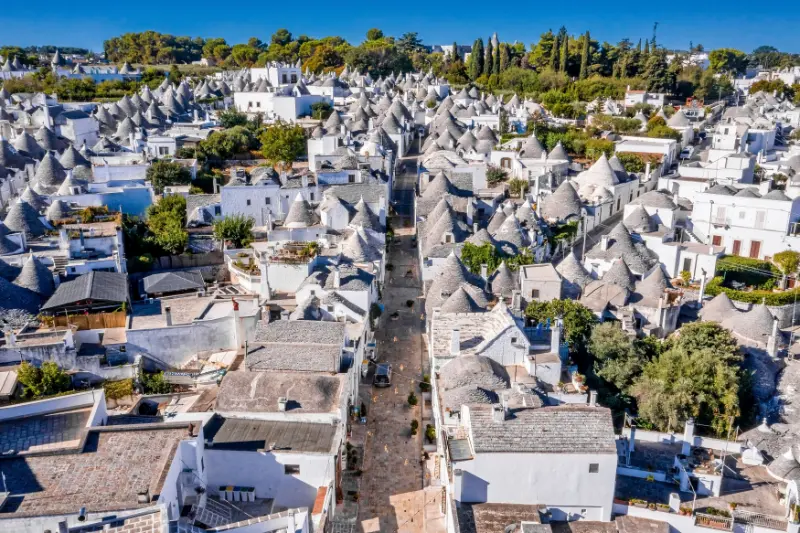
Alberobello first
Arrive around 8:00–8:30 if possible. Begin with Rione Monti while the streets are still relatively calm, then cross toward Aia Piccola. Rione Monti has the highest visual impact but also the greatest concentration of souvenir shops. Aia Piccola is quieter and more residential.
Allow two to two and a half hours. Add Trullo Sovrano if you want to understand the interior structure of a larger trullo. Otherwise, use that time for the panoramic terraces above the trulli districts.
Locorotondo for the valley view
Locorotondo is about contrast. After Alberobello’s conical roofs, you enter a compact white town whose edge opens toward the Valle d’Itria.
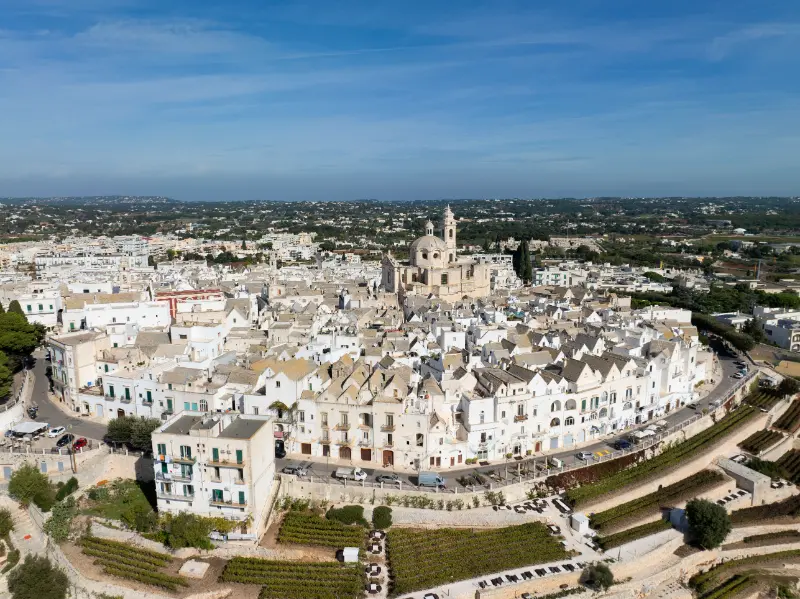
Walk the circular lanes, then spend time near Via Nardelli and the public gardens where the countryside view is the real highlight. One and a half hours is enough unless you stop for lunch.
Ostuni in the afternoon
Reach Ostuni after the hottest part of the day if you are visiting in summer. Park outside the old town and walk toward Piazza della Libertà. Then climb Via Cattedrale to the upper historic centre.
The white lanes are beautiful, but the town is steep in places and stone surfaces can be slippery. Comfortable shoes matter more here than in Bari or Lecce.
Stay for sunset. The light across the olive plain is one of the reasons Ostuni works better in late afternoon than at noon. If you are driving to Lecce afterward, eat early or have dinner after arrival rather than turning the evening into another long stop.
Day 4: Lecce, Puglia’s Baroque Counterpoint
After three days of moving between towns, give Lecce almost the entire day.
Start at Porta Rudiae and walk toward Piazza del Duomo. The enclosed square is one of the most theatrical urban spaces in Puglia. Continue toward Piazza Sant’Oronzo, the Roman amphitheatre and Basilica di Santa Croce.
Do not reduce Lecce to a sequence of façades. Walk beyond the busiest streets and notice courtyards, balconies and the warm local limestone. The centre rewards slow wandering more than almost any other city on this route.
For lunch, look for Salento specialities rather than repeating the foods you already ate in Bari. Rustico leccese is a practical savoury snack, while pasticciotto works well with coffee. For dinner, dishes based on local vegetables, legumes and pasta offer more variety than ordering seafood every night simply because you are in southern Italy.
The centre is particularly good in the early evening. When the stone turns warmer and residents return to the streets, Lecce feels less like a daytime monument district.
Day 5: Otranto and the Adriatic Coast
The final day can be cultural or beach-focused depending on the season and your departure time.
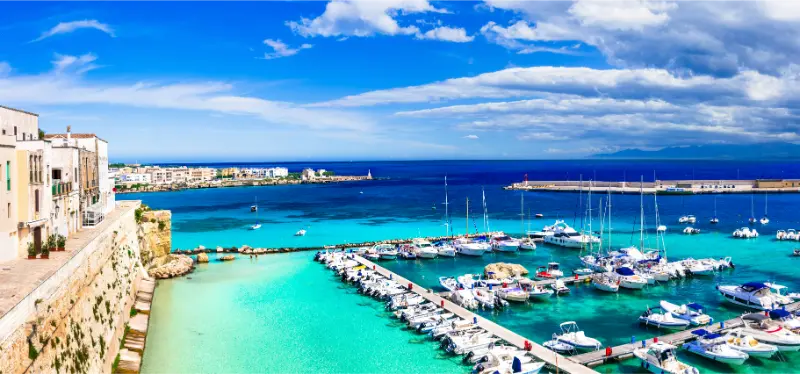
Option A: Otranto and coast
Drive from Lecce to Otranto in the morning. Enter the historic centre and visit Cattedrale di Santa Maria Annunziata, whose mosaic floor is the essential interior. Then walk toward Castello Aragonese and the seafront.
Allow three to four hours in town. Otranto is compact, but the cathedral deserves time and the harbourfront is worth enjoying without watching the clock every ten minutes.
If you have the afternoon, choose one coastal extension. North of Otranto, Baia dei Turchi and the Alimini area offer beaches and pine-backed landscapes. South, Porto Badisco provides a smaller rocky inlet and a very different feel. Do not attempt both directions in the same afternoon.
Option B: a proper beach day
If the weather is calm and hot, use Day 5 for the sea instead. From Lecce, Torre dell’Orso is convenient for a sandy beach with a recognisable limestone setting. From Monopoli or Ostuni, the Capitolo coast or Torre Guaceto may make more sense geographically.
The best beach is often the one that fits your route and the wind that morning, not the one with the highest position in a generic ranking.
How Much Driving Is Too Much?
The main danger in a five-day Puglia itinerary is not distance itself but fragmented days. Ten short drives, parking searches and hotel check-ins can feel more tiring than one longer transfer.
Group places by geography. Polignano and Monopoli belong together. Alberobello, Locorotondo and Ostuni belong to the same inland movement. Lecce and Otranto form the southern pair.
Do not add Vieste simply because it is famous. From central Puglia, reaching Gargano and then returning south creates too much north–south travel for five days.
Parking and ZTL Strategy
Assume the historic core of every major stop is a place where you should park outside and walk in. This is particularly important in Bari, Ostuni, Lecce, Alberobello during busy periods and Otranto in summer.
Do not follow a navigation app blindly into a historic centre. ZTL access can be controlled by cameras, and rules may vary by time and season. If your hotel is inside a restricted area, ask for written arrival instructions and whether the property can register your number plate when authorization is allowed.
A parking space ten minutes farther away is often better than circling the old town for twenty minutes.
Where to Eat Along the Route
Use each stop for something different. Bari is strongest for focaccia, panzerotti and street food. The Valle d’Itria is the place to look for bombette, capocollo di Martina Franca and meals at masserie. Lecce and Salento add rustico, pasticciotto and a different regional identity.
Avoid eating every meal in the most photographed square. In Polignano, Alberobello and Ostuni, the highest footfall streets naturally have the greatest concentration of tourist-oriented menus. Walking five to ten minutes away from the main viewpoint often improves both atmosphere and value.
Best Time of Year for This Itinerary
May, June, September and early October are ideal for a five-day route because walking is comfortable and the sea can still play a role. July and August work, but you need to build days around heat and parking pressure.
In midsummer, visit Alberobello early, swim or rest around midday and use Ostuni or Lecce in the late afternoon and evening. September is especially strong because the coast remains lively while the extreme August crowds have usually eased.
5 Days in Puglia Without a Car
A car-free version is possible if you simplify Day 3.
Day 1 Bari; Day 2 Polignano and Monopoli by train; Day 3 choose Alberobello as a dedicated excursion; Day 4 Lecce by train; Day 5 Otranto using the available seasonal or regional connections.
The Bari–Lecce railway is the backbone. Trenitalia currently promotes regional services along this corridor, including stops at Monopoli and Ostuni, while seasonal links connect some stations with coastal destinations. Compare train and bus connections for your exact dates, especially if you need to coordinate a final airport transfer.
Travelling with Children
Reduce the number of old towns. Children often enjoy Monopoli because the harbour, walls and beach create natural breaks. A full Day 3 of three white villages can be tiring, especially in summer.
For families, consider Alberobello in the morning, a countryside lunch, then a pool or beach instead of adding Locorotondo and Ostuni. You will see less on paper but enjoy the day more.
Is 5 Days in Puglia Enough?
Yes. Five days is enough for an excellent first trip if you stay in central and southern Puglia. It is not enough for the whole region, and that distinction matters.
The itinerary becomes better when you accept what you are leaving out. Gargano, the Tremiti Islands, Castel del Monte, Matera, Gallipoli and Santa Maria di Leuca are all worth visiting, but they belong in a longer route or a second trip.
Plan your stay
Frequently Asked Questions
Where should I base myself for five days in Puglia?
Monopoli and Lecce make an excellent two-base combination. Bari is better if you depend on public transport or have an early flight.
Can I do Puglia in five days without changing hotels?
Yes. You can stay around Monopoli for the first three days and Lecce for the final two. One single base is possible, but it creates longer daily transfers.
Is Alberobello worth visiting on a short trip?
Yes, especially on a first visit, but arrive early and include Aia Piccola rather than spending all your time in the most commercial part of Rione Monti.
Should I choose Otranto or Gallipoli on Day 5?
Otranto fits this itinerary better because it is naturally paired with Lecce and the Adriatic side. Choose Gallipoli if you specifically prefer the Ionian coast and sunset atmosphere.
What should I add if I have a sixth day?
Add a full beach day, Gallipoli, Torre Guaceto or a slower Valle d’Itria day rather than immediately driving to Gargano.