

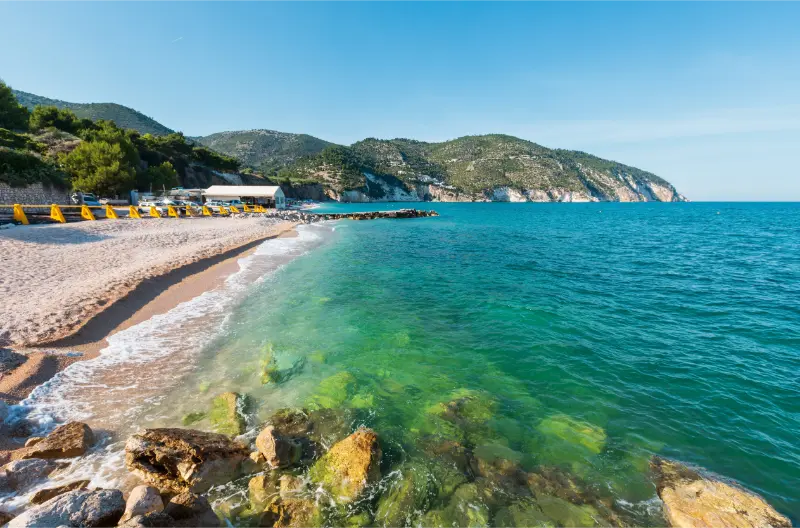
Gargano and Daunia form the most geographically varied part of northern Puglia. The Gargano promontory rises above the Adriatic with limestone cliffs, coves, pine woods and the deep shade of Foresta Umbra. West and south of the promontory, Daunia opens into plains, pilgrimage towns and the hill villages of the Monti Dauni. It feels very different from the whitewashed landscapes of the Valle d’Itria or the beach culture of Salento.
The official Gargano National Park describes a landscape where the northern coast is lower and sandier, the eastern and southern coast becomes steeper with limestone cliffs and small bays, and the interior is dominated by woodland. That contrast is exactly why a good Gargano trip needs more than a single beach base.
Gargano & Daunia at a Glance
| Area | Best for | Suggested time | Key places |
|---|---|---|---|
| Vieste & east coast | Beaches, boat trips, first visits | 3–5 nights | Vieste, Pugnochiuso, Vignanotica, Baia delle Zagare |
| Peschici & north coast | Old towns, beaches, couples | 2–4 nights | Peschici, Rodi Garganico, San Menaio |
| Foresta Umbra | Walking, nature, summer escape | 1 day | Forest trails, visitor areas, Vico del Gargano |
| Sacred Gargano | History and pilgrimage | 1–2 days | Monte Sant’Angelo, San Giovanni Rotondo, San Marco in Lamis |
| Tremiti Islands | Sea, snorkelling, island day trips | 1–3 days | San Domino, San Nicola |
| Daunia & Monti Dauni | Slow travel, villages, archaeology | 2–4 days | Foggia, Lucera, Troia, Bovino |
Why Gargano Deserves Its Own Trip
Distances on the map can be misleading. Gargano roads cross ridges, forests and winding coastline, so moving between beaches can take longer than expected. The reward is variety: a morning among beech trees can be followed by an afternoon in a sea cave or an evening in a whitewashed hill town.
The park authority identifies Foresta Umbra as a vast, largely continuous woodland system and one of the symbolic landscapes of the promontory. This is not a decorative inland detour; it is one of the reasons Gargano feels unlike the rest of Puglia. See the official Gargano National Park visitor information for current park resources.
Vieste: Best All-Round Base
Vieste is the easiest first base for many travellers because it combines a historic centre, long beaches, restaurants, boat excursions and access to the dramatic southern coast. It is lively in summer but still feels like a real town outside the busiest weeks.
Use our Vieste Travel Guide for the town itself. For accommodation, compare the areas in Where to Stay in Gargano before deciding between the old-town side, beach zones and resort stretches farther south.
Peschici, Rodi Garganico and the North Coast
Peschici rises above the sea with a dense white old town and works particularly well for couples and travellers who enjoy evenings on foot. Rodi Garganico is smaller and more relaxed, with beaches and ferry connections that can be useful seasonally. Vico del Gargano sits inland and gives you quick access to forest landscapes as well as the coast at San Menaio.
Explore these bases through our Peschici, Rodi Garganico and Vico del Gargano guides.
Mattinata and the Dramatic Southern Coast
The coast between Mattinata and Vieste contains some of Gargano’s most dramatic scenery: white cliffs, sea stacks, pebble bays and pine-covered slopes. Baia delle Zagare and Vignanotica are headline beaches, but access, parking and summer crowd management require more planning than at a simple urban beach.
Start with Mattinata, then use our detailed access guides for Baia delle Zagare and Vignanotica Beach. The broader Best Beaches in Gargano article helps compare them with easier alternatives.
Foresta Umbra: The Green Heart
Foresta Umbra changes the pace completely. The Gargano park describes more than 12,000 hectares of largely continuous forest, with beech, hornbeam, maple and yew among the characteristic trees. In summer, the shade and cooler air make it an excellent counterpoint to the coast.
Walking routes vary from easy forest strolls to longer hikes. Use our Foresta Umbra guide for practical planning and the park’s official trail information for current route resources.
Monte Sant’Angelo and Sacred Gargano
Monte Sant’Angelo is one of Gargano’s most important cultural stops, known for the Sanctuary of San Michele and a dramatic position above the plain and coast. San Giovanni Rotondo has a very different atmosphere centred on Padre Pio pilgrimage, while San Marco in Lamis adds monastery traditions and a quieter inland setting.

These places deserve time even if religion is not the main reason for your trip because they explain the historic movement of pilgrims across the promontory. Read Monte Sant’Angelo and San Marco in Lamis for individual routes.
Tremiti Islands
The Tremiti Islands sit offshore from northern Gargano and work as a day trip or a short island stay. San Domino is the main choice for coves, pine cover and swimming, while San Nicola concentrates much of the historical interest.
Ferry routes and operating seasons change, so never assume a departure just because it appeared in an older guide. Use How to Get to the Tremiti Islands for transport planning and Tremiti Islands Travel Guide for what to do after arrival.
Beyond Gargano: Foggia, Lucera, Troia and the Monti Dauni
Daunia is the part many visitors skip, but it gives northern Puglia depth. Foggia is the transport and commercial hub rather than the most picturesque stop. Lucera has Roman and medieval layers, Troia is known for its remarkable cathedral, and Bovino is one of the hill towns that changes the stereotype of flat northern Puglia.
If you enjoy archaeology, architecture and quieter places, combine Lucera, Troia and Bovino. Our Foggia guide explains when the regional hub itself is worth a stop.
How Many Days?
Five days is a useful minimum for a Gargano-focused trip: three coastal days, one forest day and one cultural or boat day. Seven days allows you to add Tremiti or northern Gargano without rushing. To include Daunia as well, ten days is far more comfortable than trying to cover everything from a single coastal hotel.
A 5-day Gargano route
- Day 1: Vieste old town and nearby beach.
- Day 2: Boat trip or the southern coast toward Mattinata.
- Day 3: Foresta Umbra and Vico del Gargano.
- Day 4: Peschici and the north coast.
- Day 5: Monte Sant’Angelo or a Tremiti day trip, depending on season and ferry schedules.
Add 2–3 days for Daunia
- Foggia as a transport stop or short urban visit.
- Lucera for archaeology and its fortress.
- Troia and Bovino for a slower hill-town day.
Getting Around
A car is the easiest way to understand Gargano because beaches, forest trailheads and hill towns are dispersed. Summer buses and local services can help, but they do not provide the same flexibility, especially outside peak season. Roads can be winding, so plan conservative driving times and avoid stacking too many destinations into one day.
For a road trip, read Renting a Car in Puglia. If you prefer public transport, Puglia by Bus explains the broader network and seasonal limitations.
Best Time to Visit
May, June and September are excellent for combining coast and hiking. July and August offer full beach-season services but bring heavier traffic and more difficult parking. Spring is particularly beautiful inland, while autumn suits forest walks and quieter towns. Winter is best for pilgrimage and cultural stops rather than a coastal resort holiday.
Where to Stay
Vieste is the best all-round first base. Peschici suits a more intimate coastal stay. Mattinata is convenient for the dramatic southern beaches. Vico del Gargano works for forest access, while Foggia is primarily useful for transport rather than seaside atmosphere.
You can check current accommodation in Gargano on Booking.com or compare rental cars for a Gargano road trip.
Food and Local Products
Gargano’s food reflects sea, forest and agriculture. Citrus cultivation is particularly associated with the northern promontory, while seafood dominates coastal menus. Inland meals often become more meat- and dairy-focused. Rather than driving long distances for a famous restaurant, choose places that match the day’s route.
Explore the Gargano & Daunia Cluster
Use these in-depth guides to plan the next step of your trip. They are part of the same destination cluster, so you can move from the regional overview to individual towns, beaches, accommodation and transport without starting your research again.

Essential coastal and town guides
Nature and beaches
- Gargano National Park
- Foresta Umbra
- Best Beaches in Gargano
- Baia delle Zagare
- Vignanotica Beach
- Lake Lesina
- Lake Varano
Islands, stay and transport
- Tremiti Islands
- How to Get to the Tremiti Islands
- Where to Stay in Gargano
Daunia beyond the promontory
- Foggia
- Lucera
- Troia
- Bovino
Plan your stay
Frequently Asked Questions
Is Gargano worth visiting if I am already going to Salento?
Yes if you have enough time. The forested promontory, cliff scenery and northern villages create a different landscape and travel rhythm from Salento.
Do I need a car?
A car is strongly recommended for a multi-stop Gargano itinerary. It is possible to travel without one, but the route becomes much more dependent on seasonal timetables.
Vieste or Peschici?
Vieste has a broader range of services and easier access to the southern coast. Peschici feels smaller and more intimate. Many travellers can enjoy both by staying in one and day-tripping to the other.
How much time should I allow for Foresta Umbra?
At least half a day for an easy introduction, and a full day if hiking is one of the main reasons for visiting.
Final Planning Advice
Gargano & Daunia should be planned by landscapes, not by a checklist. Give the coast, forest and inland culture separate space in the itinerary. That is what turns a collection of beautiful stops into a coherent northern Puglia journey.