

Murgia and inland Puglia are where the region’s geography becomes more dramatic and its history becomes harder to reduce to beach postcards. Limestone plateaus, ravines, pasture, dry-stone structures, olive groves and medieval towns surround some of Puglia’s most important cultural sites, including Castel del Monte. Altamura, Gravina in Puglia, Andria, Ruvo, Canosa, Gioia del Colle and Corato each reveal a different layer of this landscape.
This cluster is especially strong for travellers who enjoy archaeology, architecture, hiking, food and road trips. It is weaker for anyone looking for a simple car-free beach holiday, which is exactly why it deserves a dedicated pillar instead of being mixed into coastal guides.
Murgia & Inland Puglia at a Glance
| Place | Best for | Suggested time | Highlight |
|---|---|---|---|
| Castel del Monte | Architecture, history | Half day | UNESCO-listed octagonal castle |
| Altamura | Food, cathedral, archaeology | 1 day | Pane di Altamura and historic centre |
| Gravina in Puglia | Ravine landscape | 1 day | Bridge, caves and canyon setting |
| Andria | Castel del Monte base | Half–1 day | Old town and food traditions |
| Ruvo di Puglia | Museums and Romanesque art | Half–1 day | Cathedral and Jatta Museum |
| Canosa di Puglia | Archaeology | 1 day | Daunian and Roman remains |
| Gioia del Colle | Castle and wine | Half–1 day | Norman-Swabian castle and Primitivo |
Understanding the Alta Murgia Landscape
The Alta Murgia National Park protects a broad plateau landscape across the provinces of Bari and Barletta-Andria-Trani. Park planning documents describe around 68,000 hectares and identify Castel del Monte, karst features, gravine, woodland and traditional pastoral structures among the area’s major assets.
This is an open landscape rather than a single attraction. Long views, dry grasslands and isolated farm structures are part of the experience. The official Alta Murgia National Park website is the right place to check current trails, park initiatives and access information.
Castel del Monte: The Essential Landmark
Castel del Monte is the symbol of the area and one of Puglia’s most recognisable monuments. Its octagonal plan, hilltop position and association with Frederick II make it visually and historically distinctive, but the visit is relatively compact. The surrounding landscape is what turns it into a half-day experience rather than simply a building tour.
Use our Castel del Monte guide for current practical planning. If you are building a day around it, Andria, Ruvo or Corato can add food and historic-centre time without driving to the opposite end of the region.
Altamura: Bread, Stone and a Strong Historic Centre
Altamura is one of inland Puglia’s best all-round towns. Its cathedral anchors the old centre, claustri create a distinctive urban pattern, and Pane di Altamura DOP gives the city a food identity that is more than a tourist slogan.
The surrounding territory also connects with important prehistoric discoveries and karst landscapes. Our Altamura Travel Guide explains how to combine the historic centre, food and archaeological context in a realistic day.
Gravina in Puglia: The Ravine City
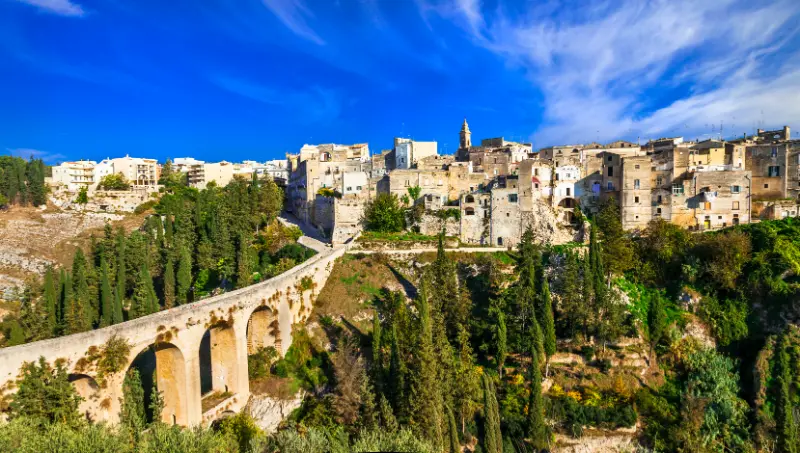
Gravina in Puglia is one of the clearest examples of how geology shapes settlement. The town sits above a deep ravine crossed by the aqueduct bridge, while caves and rock-cut spaces reveal older forms of habitation and religious life.
It is often compared visually with nearby Matera, but it deserves its own identity rather than being sold as a smaller version of another city. Read Gravina in Puglia Travel Guide for viewpoints, walking routes and practical access.
Andria, Ruvo and Corato
Andria is the main urban gateway to Castel del Monte and can be combined with the castle in one day. Ruvo di Puglia is particularly strong for Romanesque architecture and the Jatta archaeological collection, while Corato offers a less-touristed old centre, olive-oil culture and a useful position on the edge of the Alta Murgia.
Use Andria, Ruvo di Puglia and Corato to decide which town best fits your route.
Canosa and the Northern Archaeological Route
Canosa di Puglia is one of the region’s most important archaeological towns, with remains spanning Daunian, Roman and medieval periods. It is less immediately picturesque than Alberobello or Ostuni, but for travellers interested in ancient Puglia it can be far more rewarding.
Canosa combines naturally with Andria or the northern Puglia corridor. Our Canosa di Puglia guide explains the principal sites and how to organise the day.
Gioia del Colle and the Southern Murgia
Gioia del Colle sits south of Bari and provides another way into inland Puglia. Its castle, wine identity and proximity to archaeological and rural sites make it useful for visitors moving between Bari, Matera and the Valle d’Itria.

This is also a good stop if food and wine matter more than headline monuments. See Gioia del Colle for a detailed plan.
Hiking and Cycling
The Murgia is one of Puglia’s best areas for active travel because the plateau and park landscape offer routes that feel completely different from the coast. The Alta Murgia park documents walking and cycling itineraries around Castel del Monte and across rural tracks.
Summer midday heat can be severe in exposed areas, so spring and autumn are usually better for longer routes. Use our Best Hiking Trails in Puglia and Cycling in Puglia guides, then check current park conditions before setting out.
How Many Days?
Two days gives you Castel del Monte plus one major inland town. Four days allows Altamura, Gravina, Andria and a smaller stop without constant driving. Five or six days works if hiking or archaeology is a major purpose of the trip.
A practical 4-day route
- Day 1: Andria and Castel del Monte.
- Day 2: Altamura historic centre and food-focused stops.
- Day 3: Gravina in Puglia and its ravine landscape.
- Day 4: Ruvo and Corato, or Canosa if archaeology is your priority.
Where to Stay
Altamura is the strongest all-round base for a multi-day inland trip because it combines restaurants, a substantial historic centre and access toward Gravina and the wider Murgia. Andria is best if Castel del Monte and northern sites dominate your itinerary. A countryside masseria can be excellent if you are comfortable driving for dinner.
For accommodation, check stays in Altamura and the surrounding Murgia on Booking.com.
Getting Around
A car is strongly recommended for a true Murgia itinerary. Trains serve some towns, but the park landscape, Castel del Monte and rural sites are much easier when you control the schedule. Do not underestimate distances between a town centre and an isolated archaeological or natural site.
Read Renting a Car in Puglia before planning a road trip. If you are combining Bari with only one inland town, public transport may still be practical, but check the exact route rather than assuming a direct connection.
Best Time to Visit
April, May, late September and October are particularly good for the Murgia because outdoor walking is comfortable and the plateau is more enjoyable than under peak summer heat. Winter can be atmospheric in towns, while July and August are best approached with very early sightseeing and limited midday hiking.
For seasonal planning, compare Puglia in Spring and Puglia in Autumn.
Food and Wine
Inland Puglia shifts attention from seafood toward bread, meat, cheeses, legumes, olive oil and wine. Altamura bread is the obvious reference, while Gioia del Colle is associated with Primitivo. Food works best as part of the route: a bakery stop in Altamura, lunch near the park or a winery appointment near Gioia del Colle.
Murgia vs Valle d’Itria
The two areas overlap culturally but feel different. Valle d’Itria is more immediately associated with trulli, white towns and masserie; Alta Murgia is broader, more austere and more archaeological. If you have a week, combining both creates a much richer inland Puglia itinerary than choosing one famous town and returning to the coast.
Explore the Murgia & Inland Puglia Cluster
Use these in-depth guides to plan the next step of your trip. They are part of the same destination cluster, so you can move from the regional overview to individual towns, beaches, accommodation and transport without starting your research again.
Essential history and town guides
- Castel del Monte
- Altamura
- Gravina in Puglia
- Andria
- Ruvo di Puglia
- Canosa di Puglia
- Gioia del Colle
- Corato
Outdoor planning
- Best Hiking Trails in Puglia
- Cycling in Puglia
Road-trip and seasonal planning
Plan your stay
Frequently Asked Questions
Is Alta Murgia worth visiting on a first trip?
Yes if you enjoy history, architecture or landscapes, especially Castel del Monte and Altamura. If your first trip is only three days and beach-focused, save the wider Murgia for a longer itinerary.
Can I combine Castel del Monte and Altamura in one day?
It is possible with a car, but the day is more satisfying if you choose one additional stop rather than trying to add Gravina as well.
Is Gravina the same experience as Matera?
No. Both use ravine landscapes and rock-cut heritage, but they have different histories, urban forms and visitor experiences.
Do I need hiking equipment?
Not for town visits or Castel del Monte. For longer park routes, use proper footwear, carry water and check route conditions, especially in hot weather.
Final Planning Advice
Murgia & Inland Puglia is where a trip becomes less about famous photographs and more about understanding the region’s geology, medieval history, archaeology and agricultural landscape. Give it several days, drive conservatively, and allow the distances between towns to become part of the journey rather than something to rush through.
2 thoughts on “Murgia & Inland Puglia Travel Guide: Castel del Monte, Altamura & Gravina”