
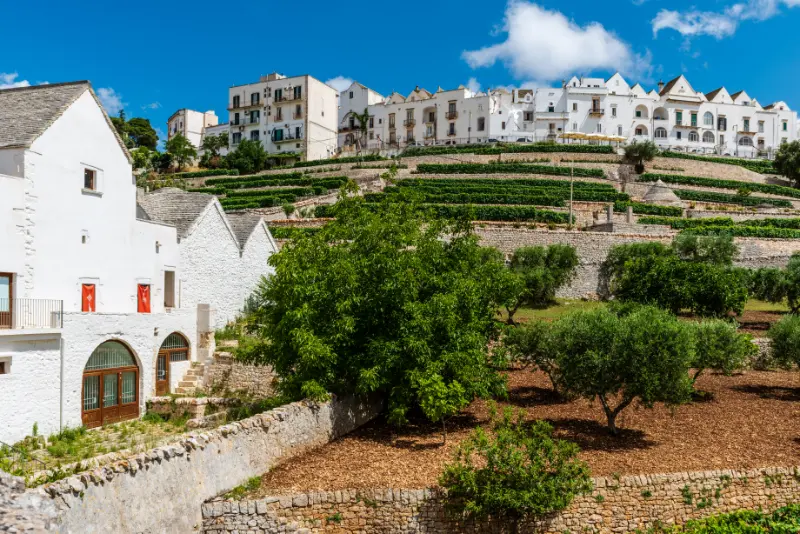
Staying in a masseria is one of the most distinctive ways to experience Puglia, but the word itself can mean very different things. Some masserie are working farms with olive groves, vegetable gardens and agricultural activities. Others are elegant countryside hotels inside carefully restored historic buildings. Some are intimate guesthouses; others function more like full-service resorts with pools, spas and restaurants.
That variety is part of the appeal, but it also means you should choose a masseria according to location, transport and the kind of stay you want, not simply because the building looks beautiful in photographs.
What exactly is a masseria?
A masseria is a traditional fortified or rural farmhouse complex associated with agricultural estates in southern Italy, especially Puglia. Historically, these properties were working centres for farming, storage, animals and rural life. Their architecture varies by period and area, but thick stone walls, enclosed courtyards and functional agricultural spaces are common themes.
Today, many restored masserie have been converted into hotels, agriturismi, restaurants, wedding venues or private accommodation. The original agricultural function may still be important—or may be mostly part of the building’s history.
The tourism portal Visit Puglia highlights masserie as part of the region’s rural culture and lists examples across the coast and countryside. Its masserie overview is useful background, although you should always verify the current services of an individual property directly.
Why choose a masseria instead of a town hotel?
The main reason is space and atmosphere. A masseria can give you olive groves, quiet evenings, a pool, outdoor breakfasts and a stronger connection with rural Puglia than a room inside a busy historic centre.
It can also simplify a road trip. If you plan to explore Ostuni, Cisternino, Locorotondo, Martina Franca, Alberobello and the Adriatic beaches, one countryside base may reduce the need to change accommodation repeatedly.
The trade-off is convenience. You may need to drive for dinner, shopping and sightseeing. If you want to walk to restaurants every evening, a masseria several kilometres outside town may not suit you, however beautiful it is.
Our Where to Stay in Puglia article helps compare countryside bases with towns and coastal areas.
Best areas for a masseria stay
Ostuni and the northern Salento countryside
The countryside around Ostuni, Carovigno and Fasano has one of the highest concentrations of well-known masserie. It works particularly well for travellers who want a mix of beaches, white towns and countryside.
From this area you can reach Ostuni, the coast around Torre Guaceto or Torre Canne, and several Valle d’Itria towns without changing hotel every night.
This is also a good choice for couples and travellers who want a more polished rural-hotel experience, because the area includes everything from small agriturismi to luxury properties.
Fasano and Savelletri
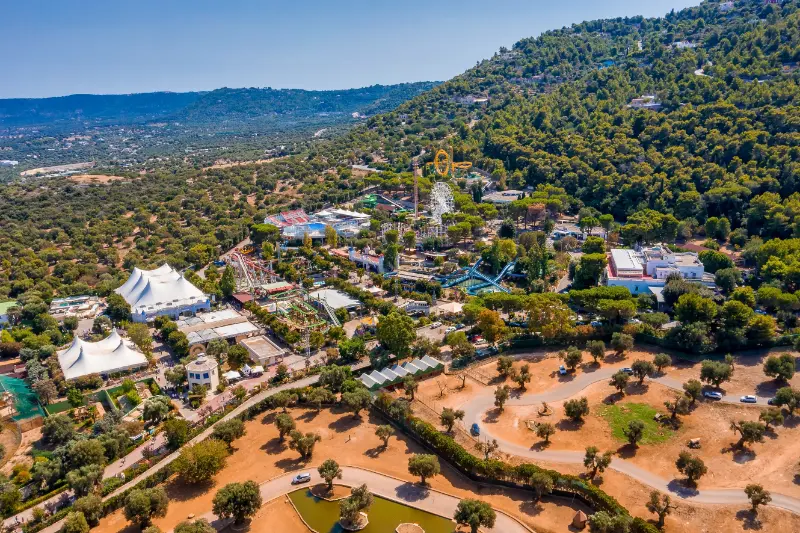
The Fasano countryside sits close to both the Valle d’Itria and the Adriatic. It is convenient for Monopoli, Alberobello, Locorotondo, Martina Franca and the archaeological area of Egnazia, while the Savelletri coast adds seafood restaurants and beach access.
For travellers who want a masseria but do not want to feel completely isolated, this area can be an excellent compromise.
See our Fasano Travel Guide and Savelletri guide before choosing the exact location.
Valle d’Itria
A masseria around Cisternino, Martina Franca or Locorotondo puts you inside the landscape of trulli, dry-stone walls and olive groves. The atmosphere is ideal for a slower trip focused on food, villages and countryside drives.
The disadvantage is that beach access may require more driving than from a property near Fasano or Ostuni. If swimming every day is a priority, check the actual road distance to the coast rather than the straight-line distance shown on a map.
Salento
South of Lecce, masserie become useful bases for exploring both coasts. A rural property can put you between Otranto and the Ionian side, allowing you to choose the coast according to weather and wind.

Distances in lower Salento can still be substantial. Do not assume “central Salento” means every famous beach is twenty minutes away.
Alta Murgia and northern Puglia
Masserie also exist away from the tourism-heavy Valle d’Itria and Salento. Around Andria, Castel del Monte and the Alta Murgia, rural stays can connect food, olive oil, vineyards and inland landscapes.
This is a strong choice for returning visitors or anyone who wants a quieter itinerary beyond the most photographed towns.
Three real masserie around Ostuni to understand the range
The following are verified examples, not a ranking. Services, rates and restaurant access can change, so check directly before booking.
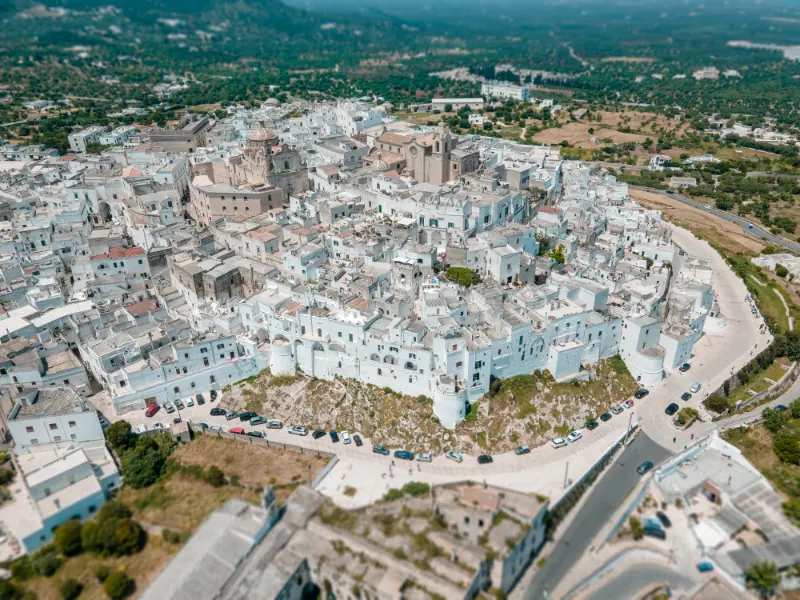
Masseria Salinola is at Contrada Salinola, 72017 Ostuni. It is a hotel in the countryside outside the White City and works as an example of a traditional masseria-style base close to Ostuni.
Masseria Moroseta is at Contrada Lamacavallo, 72017 Ostuni. It is known for a contemporary interpretation of masseria architecture and appears in the Michelin Guide’s restaurant selection as well as operating as accommodation.
Masseria Cervarolo is at Contrada Cervarolo, SP14, 72017 Ostuni. Its position inland from Ostuni gives travellers another example of the rural landscape where masserie and trulli often coexist.
These properties illustrate why you should compare more than star rating. One traveller may want a restaurant and spa; another may care more about traditional architecture, a small number of rooms or proximity to a specific town.
Do you need a car for a masseria stay?
In most cases, yes. Some properties offer transfers, bikes or restaurant service, but a rural location usually means the car is the practical default for sightseeing.
Before booking without a car, ask four specific questions: Can the property arrange pickup from the nearest station? Is dinner available every night? Can you reach any town safely on foot? How much does a typical taxi to the nearest centre cost?
A property described as “5 km from Ostuni” can be lovely with a car and frustrating without one.
If you are driving, our Driving in Puglia article is worth reading before the trip.
Masseria with a restaurant or without?
A good on-site restaurant can make a huge difference, especially after a day of driving. Being able to have dinner and local wine without returning to the car is one of the luxuries of rural accommodation.
But check how often the restaurant operates. Some masserie serve dinner only on certain evenings, only to resident guests or only during part of the season. Others offer tasting menus rather than a casual à la carte dinner.
If you enjoy eating in different towns, a property without nightly dining may not be a disadvantage. You simply need to accept the drive back after dinner and plan alcohol accordingly.
Pool, beach or both?
Many travellers picture a masseria with a large pool, but not every historic property has one. If the pool matters, verify whether it is seasonal, heated, shared with events or subject to opening hours.
For a beach-focused holiday, look at actual driving time to the coast. The Ostuni and Fasano countryside can offer relatively easy access to the Adriatic, while deeper Valle d’Itria properties may feel more inland.
A masseria can work beautifully for a “half beach, half sightseeing” holiday: beach early, return to the pool in the afternoon, then visit a hill town in the evening.
Families in a masseria
Families can benefit from outdoor space, pools and larger rooms, but romantic boutique masseria and family-friendly masseria are not the same thing.
Check whether the room setup works for children, whether the pool has appropriate access, whether there are animals or farm activities, and whether dinner service is flexible enough for your schedule.
The Region of Puglia promotes educational farms and family-friendly rural experiences, but not every accommodation automatically provides them. Ask what is actually available during your dates.
See our Puglia with Kids article for broader family planning.
Masseria for couples
For couples, a masseria can be one of the most atmospheric stays in the region. Quiet gardens, rural sunsets and a restaurant on site can make the accommodation part of the trip rather than simply somewhere to sleep.
If romance is the priority, check whether the property hosts large weddings during your stay. Puglia is a major wedding destination, and some masserie operate as event venues. A wedding does not necessarily ruin a stay, but you should know whether parts of the property or restaurant may be reserved.
What “agriturismo” means compared with “masseria”
The terms overlap but are not identical. “Masseria” describes the type or history of the rural property, while agriturismo is connected to agricultural hospitality under Italian rules. A restored masseria can operate as a conventional hotel; an agriturismo can be located in a different type of rural building.
If the agricultural experience matters, look for specific evidence: farm production, olive oil, vineyards, animals, gardens, educational activities or meals based on the estate’s produce.
Do not assume the presence of old stone walls guarantees an active farm.
Breakfast and local food
Breakfast is one of the pleasures of a good masseria stay. Local cakes, fruit, cheeses, bread, preserves and olive oil can give a much stronger sense of place than a generic hotel buffet.
Still, breakfast style varies widely. If you have allergies, need vegan options or travel with children who eat selectively, ask in advance rather than assuming every rural property can improvise.
Staying during olive harvest
Autumn can be fascinating in olive-growing areas because agricultural activity becomes visible. Some properties offer harvest-related experiences or visits to mills, but dates depend on weather, cultivar and farm decisions.
Do not book a trip solely on an old statement that “the harvest is always in October”. Contact the producer or property directly if participating matters to you.
For food and agricultural activities, see our Best Food Experiences in Puglia guide.
Masseria in summer: what changes
In July and August, pools and outdoor spaces are at their most appealing, but rates and demand are also high. Roads toward the coast can become congested, and famous towns are busiest.
A countryside base can actually improve the experience because you can visit places early, retreat during the hottest hours and return in the evening.
The downside is that you may spend more time in the car if every day targets a different part of the region. Choose a masseria that matches your itinerary rather than using one property as a base for the entire length of Puglia.
Masseria in spring and autumn
Spring and early autumn are excellent for countryside stays because walking, cycling and village sightseeing are more comfortable. Pools may be cooler or unavailable depending on the property, so check if swimming matters.
Evenings can also be cooler than coastal-summer marketing images suggest. Pack a layer and pay attention to whether outdoor restaurants move indoors outside high season.
Questions to ask before booking
Ask about parking, restaurant days, pool season, check-in time, road access, distance from the nearest town, transfer options, air conditioning, room configuration and event schedule. If the property is reached by an unpaved road, that is worth knowing before arriving in a low rental car at night.
Also confirm whether the room is in the historic main building or a newer annex. Both can be excellent, but the experience may differ from the photographs you first saw.
How many nights should you stay?
For Valle d’Itria and the Ostuni/Fasano countryside, three or four nights is a useful minimum if you want the property to feel like a base rather than a one-night novelty. It gives you time for towns, beaches and at least one slow afternoon at the masseria.
A one-night stay can work on a road trip, but you may spend more time checking in and out than enjoying the estate.
Is a masseria stay worth it?
Yes, when it fits the trip. A masseria is especially worthwhile if you value countryside, architecture, space, local food and slower evenings. It is less suitable if you want nightlife at your doorstep or plan to travel entirely by train.
Choose the location first, then the property. Check what is genuinely included, understand the transport reality and stay long enough to enjoy the place. Done well, a masseria can become one of the strongest memories of Puglia—not because it is a luxury trend, but because it puts you inside the rural landscape that explains so much of the region’s food, architecture and rhythm.
Check current stays on Booking.com