
Seven days is the sweet spot for a first trip to Puglia. A week gives you enough time to see the region’s major contrasts—Bari’s old town, the limestone Adriatic coast, trulli and white villages, Lecce’s baroque centre and two different sides of Salento—without turning every day into a transfer day.
The best one-week itinerary does not try to include every famous place. Gargano alone deserves several days, and adding it to a week that also reaches southern Salento produces a route that looks impressive on a map but feels rushed on the ground. For most first-time visitors, central Puglia plus Salento is the more satisfying choice.
7 Days in Puglia at a Glance
- Day 1: Bari.
- Day 2: Polignano a Mare and Monopoli.
- Day 3: Alberobello, Locorotondo and Cisternino.
- Day 4: Ostuni and Torre Guaceto or the Adriatic coast.
- Day 5: Lecce.
- Day 6: Otranto and the Adriatic Salento coast.
- Day 7: Gallipoli, Porto Selvaggio or Porto Cesareo on the Ionian side.
This is a point-to-point route. Arriving at Bari and departing from Brindisi is ideal, although a round trip through Bari is still manageable.
Where to Stay: Three Bases Are Enough
Use Bari or Monopoli for the first two nights, the Valle d’Itria or Ostuni for two nights, and Lecce for the final three. This keeps your luggage movements under control and avoids long evening drives after dinner.
Bari is best for public transport. Monopoli is better for coastal atmosphere. Staying around Ostuni or Cisternino gives you countryside access and a quieter middle section. Lecce is the most practical southern base because it works for both Adriatic and Ionian day trips.
If you want a coastal first base, compare places to stay in Monopoli. For the southern half, compare accommodation in Lecce.
Day 1: Bari
Give Bari a full day instead of using it only as an airport gateway.
Start in Bari Vecchia from Piazza del Ferrarese. Walk to Basilica di San Nicola, Cattedrale di San Sabino and Castello Svevo. Between the major monuments, use the lanes themselves as part of the experience. Strada Arco Basso is known for orecchiette-making, but the old town is much larger than that one street.
For lunch, keep it simple with focaccia barese or a panzerotto. In the afternoon, cross into the Murat district, follow Via Sparano and Via Argiro, then end along the seafront.
If the weather is extremely hot, take a break in the middle of the day and return to the Lungomare Nazario Sauro in late afternoon. The waterfront has little shade and is more enjoyable when the temperature drops.
Bari’s evening atmosphere around Piazza Mercantile is worth staying for. If you arrive on a late flight, shift part of the old town to the following morning rather than shortening everything else.
Day 2: Polignano a Mare and Monopoli
Travel south along the Adriatic. These towns are only a short distance apart, but each deserves a separate half-day.
Polignano in the morning
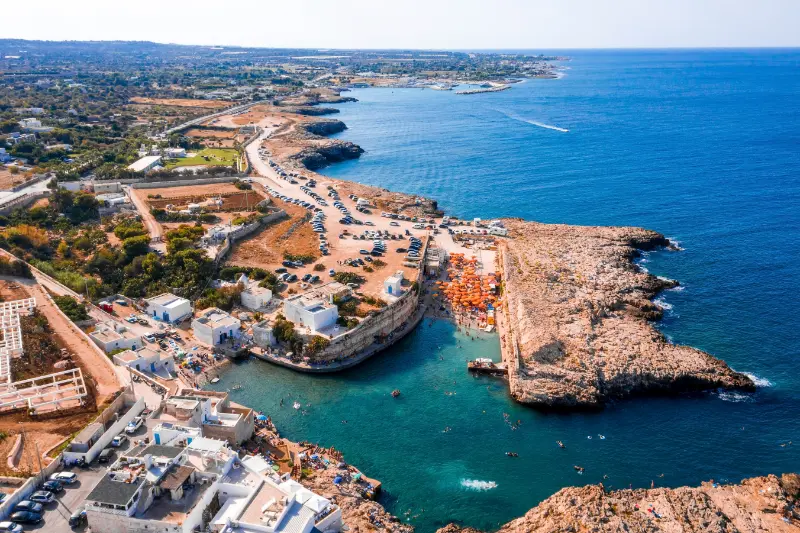
Arrive early enough to see Lama Monachile before the cove becomes packed. Use the bridge for the classic view, then enter the old town and walk toward the cliff terraces.
Two to three hours is sufficient for sightseeing. A boat trip to the sea caves can be excellent, but on a one-week itinerary it should replace another activity rather than simply being added to an already full day.
Monopoli after lunch
Monopoli is the stronger afternoon and evening stop. Walk from Porto Vecchio toward Castello Carlo V, then through the old town to the cathedral and Cala Porta Vecchia.
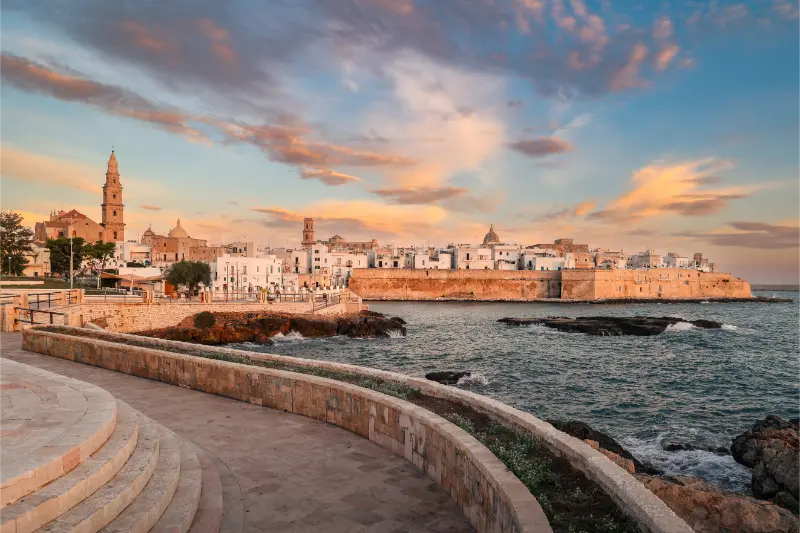
If you want a swim, Cala Porta Vecchia is convenient because it sits directly beside the historic centre. For larger sandy beaches, continue south toward Capitolo, but this works best with a car.
Stay in Monopoli if you want dinner by the harbour and an easy start toward the Valle d’Itria the next morning.
Day 3: Alberobello, Locorotondo and Cisternino
Pick up a car by this point if you have not already. Compare rental cars in Puglia if you want flexibility for the inland and Salento sections.
Alberobello before 10:00
Start with Rione Monti, then move to Aia Piccola. The difference matters: Rione Monti is the iconic image, while Aia Piccola is quieter and less commercial.
Use the viewpoints above the trulli districts before the light becomes harsh. Allow two to three hours, depending on whether you enter Trullo Sovrano.
Locorotondo around midday
Locorotondo is compact. Its best feature is the relationship between the white historic centre and the valley below. Walk the ring of lanes, then pause along the edge near Via Nardelli for the panorama.
An hour and a half is usually enough unless you stop for lunch.
Cisternino in the late afternoon
Cisternino is a good place to slow down. Park outside the historic core, walk through the white lanes and finish near the viewpoints over the Valle d’Itria.
For dinner, this is one of the best stops for bombette. Many butcher shops cook meat for customers, creating a dining style that feels specific to the town rather than a generic “Puglia tasting menu.”
Stay in a masseria or countryside property if you want one night away from urban centres. The trade-off is that you will need a car for dinner and evening movement.
Day 4: Ostuni and the Adriatic Coast
Spend the morning at the sea and the late afternoon in Ostuni. This order works especially well in summer.
Morning option: Torre Guaceto
Torre Guaceto is not a conventional resort beach. It is a protected coastal landscape of dunes, Mediterranean vegetation and marine habitat. Access and parking arrangements can change seasonally, so check the reserve’s current visitor information before setting out.

Choose it if you value nature and a quieter landscape more than beach clubs and immediate services.
Alternative: Capitolo or a simple beach near Monopoli
If you want easier facilities, the coast south of Monopoli offers a mix of sandy coves and lidos. It is less wild than Torre Guaceto but more straightforward for families or travellers who want a comfortable morning by the sea.
Late afternoon in Ostuni
Reach Ostuni after 16:00 or later in midsummer. Start at Piazza della Libertà and climb toward the cathedral. The old town has steps, slopes and polished stone, so shoes with grip are useful.
The best part of the visit is not a single monument. It is the sequence of white lanes and the views from the upper edge toward the olive plain and Adriatic.
Stay until sunset if possible. Ostuni’s whiteness is most dramatic when the light is no longer directly overhead.
Day 5: Lecce
Drive or take the train south to Lecce and give the city the full day.
Begin at Porta Rudiae, continue to Piazza del Duomo, then walk toward Piazza Sant’Oronzo, the Roman amphitheatre and Basilica di Santa Croce. If you enter multiple churches, consider the available combined ticket options rather than paying separately without checking what is included.
Lecce is a city where details matter. Look at carved balconies, doorways and the warm-toned local stone, then leave the most obvious route for quieter lanes around the centre.
For lunch, try rustico leccese or a casual plate rather than another long restaurant meal. Save dinner for a slower experience after the day-trippers have thinned out.
In summer, schedule churches and shaded interiors around the hottest part of the day. Piazza Sant’Oronzo and the larger paved streets can feel exposed in early afternoon.
Day 6: Otranto and the Adriatic Salento Coast
Head east to Otranto early.
The cathedral is the essential sight because of its extraordinary mosaic floor. Then walk to Castello Aragonese and along the waterfront. The old town is compact enough that three to four hours is usually sufficient.
After lunch, choose one direction.
North: Baia dei Turchi and the Alimini area are best if you want sand, pine woods and a more classic beach afternoon.
South: Porto Badisco, Santa Cesarea Terme and Castro give you rockier scenery, coves and a more dramatic coastal drive. This is the better choice if your priority is landscapes rather than a long sandy beach.
Do not attempt to cover both directions. The strongest Salento days have one coastal line, not a zigzag across the peninsula.
Day 7: Choose Your Ionian Coast
Your last day should contrast with the Adriatic.
Gallipoli for town and sunset
Gallipoli combines an old island centre, harbour, churches and beaches. Walk across the bridge into the historic centre, explore the lanes and seafront, then spend the afternoon at a beach south of town if the weather suits.
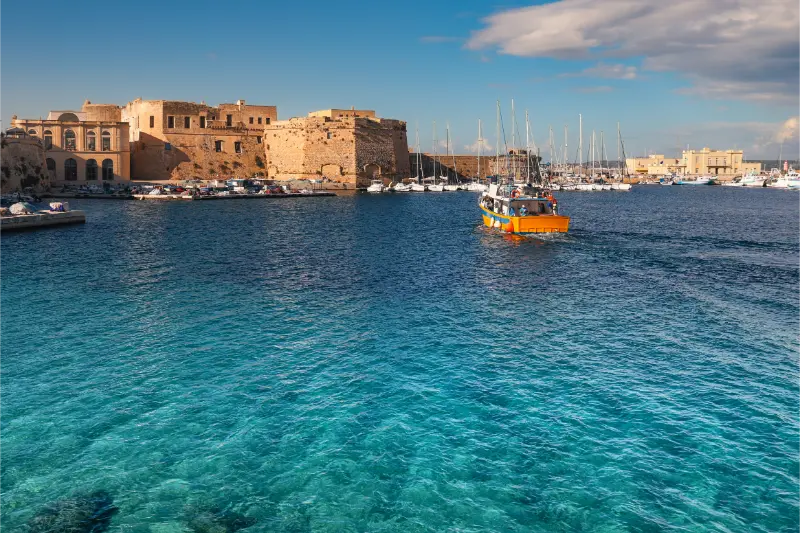
Gallipoli is particularly strong toward sunset because the old town faces the Ionian light.
Porto Selvaggio for nature
Choose Porto Selvaggio if you want a final day built around walking, pine forest and clear rocky water. This is not a soft-sand resort experience. Water shoes can be useful, and the walk from parking areas is part of the visit.
Porto Cesareo for shallow water and beach life
Porto Cesareo and nearby Torre Lapillo are better for families and travellers who want pale sand, shallow water and services. In peak summer, parking and traffic become significantly more difficult, so arrive early.
If your flight leaves from Brindisi in the evening, Porto Cesareo is geographically more convenient than pushing all the way to Santa Maria di Leuca.
The Best Beach Strategy for One Week
Do not pre-assign every beach months in advance. Wind matters in Salento. A beach that is beautiful on a calm day can be much less pleasant when exposed to strong wind and waves.
Use your route as the framework, then decide between Adriatic and Ionian options based on conditions. This flexibility is easier with a car, but summer bus services can also connect Lecce with several coastal destinations.
In 2026, the provincial Salento in Bus network is operating seasonally from mid-June to mid-September, with routes linking Lecce to Otranto, Torre dell’Orso, Gallipoli, Porto Cesareo and Santa Maria di Leuca. Always check the current timetable for your specific date.
Driving and Parking During the Week
Puglia is generally straightforward to drive outside historic centres. The problem is not the main roads; it is the final kilometre into old towns and beaches.
Treat ZTL signs seriously. Bari Vecchia, Lecce, Ostuni, Otranto and many smaller centres have access restrictions or pedestrian areas. Park outside and walk. If your accommodation is inside a restricted zone, ask the property how authorized arrivals are handled before entering.
At beaches, arrive before 9:00 in July and August if parking matters. The difference between arriving at 8:30 and 11:00 can be the difference between a simple beach day and forty minutes of circling.
One Week Without a Car
A car-free week works if you base yourself in Bari and Lecce.
Days 1–2: Bari, Polignano and Monopoli by train.
Day 3: dedicate the day to Alberobello using the available train or bus combination rather than trying to include three Valle d’Itria towns.
Day 4: Ostuni by train plus the local station-to-town connection, or simply add another coastal town.
Days 5–7: Lecce plus Otranto and one summer coastal excursion.
The current Bari–Lecce regional rail corridor is strong by southern Italian standards, and Trenitalia also promotes integrated links toward several tourist destinations. Compare public-transport options before locking in accommodation that depends on a late connection.
Food to Try Across the Week
Use geography to vary your meals. Bari for focaccia, panzerotti and orecchiette. The Valle d’Itria for bombette, local cured meats and masseria cooking. Lecce and Salento for rustico, pasticciotto, caffè leccese, seafood and local pasta dishes.
Try not to order the same “traditional Puglia platter” every evening. Regional cooking changes noticeably between Bari, the Valle d’Itria and Salento, and a one-week route is long enough to notice those differences.
Best Time for a 7-Day Puglia Itinerary
May and June are excellent if your priority is sightseeing with some beach time. September is arguably the best overall month because the sea remains warm, days are still long enough for touring and August pressure has eased.
July is busy but manageable with early starts. August requires the most planning, particularly around Ferragosto. Parking, beach access and restaurant reservations become much more important.
October can be excellent for towns and food, but do not build the trip around guaranteed swimming weather.
Is One Week Enough for Puglia?
Yes. One week is enough for a memorable first trip, but not for Gargano, central Puglia and all of Salento together.
The route above works because it moves in one direction and gives each landscape its own day. If you have already visited Bari and the Valle d’Itria, then use a future week for Gargano and the Tremiti Islands rather than repeating the same circuit.
Plan your stay
Frequently Asked Questions
What is the best 7-day itinerary for first-time visitors?
Bari, Polignano/Monopoli, the Valle d’Itria, Ostuni, Lecce, Otranto and one Ionian-coast day provide the best mix without excessive driving.
Should I stay in Bari or Monopoli?
Bari is better for transport and city life. Monopoli is better if you want a smaller coastal base, evening atmosphere and easy swimming.
Can I include Matera in one week?
Yes, but you should remove another full day. The cleanest swap is replacing the Ostuni/beach day or one Salento coast day with Matera rather than adding Matera on top.
Can I include Gargano in seven days?
You can, but then focus the trip on northern and central Puglia. Combining Vieste with Lecce and the far south in a single week creates unnecessary driving.
How many nights should I spend in Lecce?
Three nights is ideal for this route because it gives you one city day and two different coastal day trips without moving accommodation.