
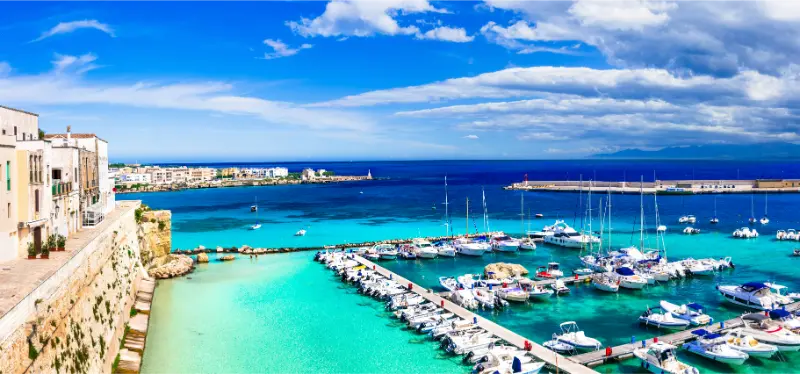
Otranto is one of those places in Puglia where you do not really have to choose between a cultural trip and a beach holiday. Here, a medieval old town rises almost directly above the Adriatic, a castle guards the waterfront, one of southern Italy’s most remarkable cathedral mosaics lies just a few streets away, and some of the clearest beaches in Salento begin only a short distance from the centre.
Located on the Adriatic coast of Salento, in the province of Lecce, Otranto feels more intimate than many of Puglia’s better-known destinations. You can spend the morning exploring narrow lanes enclosed by ancient walls, have lunch overlooking the harbour and be swimming in transparent water by early afternoon.
And while Otranto is small enough to explore on foot, it is also an excellent base for discovering the coastline around Baia dei Turchi, Alimini, Punta Palascia, Porto Badisco and the wild eastern side of Salento.
In this Otranto travel guide, you will find the best things to do, the most beautiful beaches, where to stay, how to get there and practical tips for planning your visit.
Why Visit Otranto?
Otranto is particularly appealing if you want a destination that combines several sides of Puglia without requiring long journeys between them.
The historic centre is compact and atmospheric. The sea is always close. There are beaches within walking distance, while much wilder sections of coastline can be reached in just a few minutes by car.
Its location also makes Otranto an excellent stop on a wider Salento itinerary, especially when combined with Lecce and the Adriatic coast.
The best way to enjoy Otranto is not to treat it simply as another beach resort. The town itself deserves at least a few unhurried hours before you start exploring the coastline.
Best Things to Do in Otranto
Explore Otranto Old Town
The best introduction to Otranto is simply to enter the Centro Storico and start walking.
Behind the old defensive walls, the town becomes a maze of stone lanes, stairways, small squares, whitewashed houses, craft shops and terraces. Many streets eventually lead towards either the cathedral, the castle or viewpoints over the Adriatic.
Do not worry too much about following a fixed route. Otranto’s historic centre is small enough that getting slightly lost is part of the experience. Follow the quieter side streets, walk uphill and occasionally turn around: some of the most attractive views appear unexpectedly between the buildings.
The old town becomes particularly atmospheric in the late afternoon and evening, when the strongest summer heat fades and restaurants and small shops begin to fill.
Visit Otranto Cathedral
The Cathedral of Santa Maria Annunziata is the cultural highlight of Otranto and one of the places you should not miss, even if you only have a few hours in town.
The cathedral was consecrated in 1088, but what makes it extraordinary is its vast 12th-century mosaic floor. Created between 1163 and 1165 under the direction of the monk Pantaleone, the mosaic combines biblical stories, animals, mythical creatures and medieval imagery around the symbolic Tree of Life.
Rather than looking at it simply as decoration, take a few minutes to follow the images across the floor. It feels almost like a medieval illustrated book spread beneath your feet.
The cathedral also contains the Chapel of the Martyrs of Otranto, connected with the Ottoman conquest of the city in 1480, as well as an atmospheric crypt supported by numerous columns.
Even travellers who normally spend little time inside churches should make an exception here.
See the Aragonese Castle
At the edge of the historic centre stands the imposing Castello Aragonese, one of Otranto’s most recognisable landmarks.
The fortress was substantially rebuilt and strengthened after the events of the late 15th century. Today it remains one of the symbols of the town and is also used for exhibitions and cultural events.
Its thick defensive walls, towers and position overlooking the sea make it easy to understand just how strategically important Otranto once was.
Even if you decide not to visit the interior, it is worth walking around the outside of the castle before continuing through the old town.
Walk Along Lungomare degli Eroi
After exploring the narrow streets of the historic centre, head towards the Lungomare degli Eroi, one of the most pleasant areas for a walk in Otranto.
The waterfront curves around the bay with cafés, restaurants and open views across the Adriatic. It is particularly enjoyable around sunset and after dinner, when the town becomes lively without losing its relaxed seaside atmosphere.
For a completely different experience, walk here early in the morning. The town is quieter, temperatures are more comfortable and the light over the Adriatic can be beautiful.
Best Beaches in Otranto
One of the biggest advantages of staying in Otranto is that you do not need to travel far to reach the sea.
You can find beaches and bathing areas close to the town, while some of the most beautiful stretches of coastline in Salento are only a few kilometres away.
Otranto Town Beaches
There are small sandy beaches and bathing spots directly around Otranto’s bay, making them extremely convenient if you are staying close to the centre.
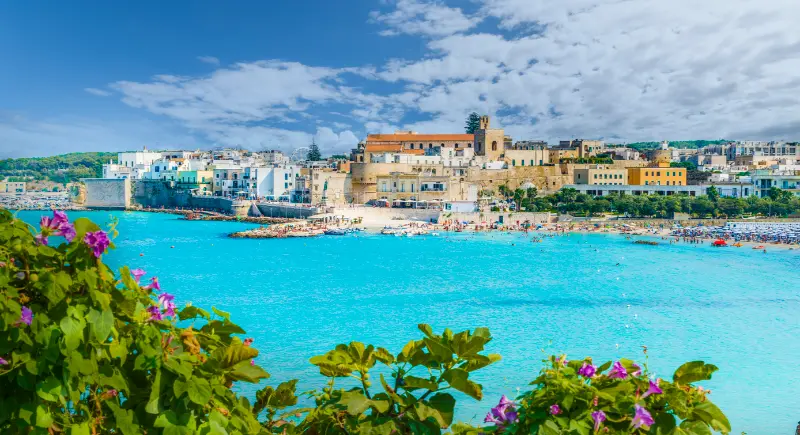
They may not offer the wild scenery of the beaches farther along the coast, but being able to walk from your accommodation to the sea is a major advantage, particularly if you are travelling without a car.
They are also perfect for a quick swim in the morning or in the late afternoon after exploring the historic centre.
Baia dei Turchi
Around 6 kilometres north of Otranto, Baia dei Turchi is one of the most famous beaches on the Adriatic coast of Salento.
The beach is surrounded by Mediterranean vegetation and is known for its light sand and remarkably clear turquoise water. The setting feels much more natural than the beaches located directly inside coastal towns.
Its popularity also means that it can become crowded during July and August.
My advice is simple: arrive early in the morning. You will find a quieter atmosphere, easier parking and a much better chance of enjoying the natural beauty that made Baia dei Turchi famous.
Depending on where you park, reaching the beach normally requires a short walk through the surrounding natural area.
Alimini Beaches
Continue north from Baia dei Turchi and you reach the coastline around the Alimini Lakes, where long stretches of sand make this one of the best areas near Otranto for a traditional beach day.
The coast alternates between equipped beach clubs and more natural sections surrounded by Mediterranean vegetation.
Alimini is particularly suitable if you want more space than the small beaches in Otranto, easy access to sandy shores and the possibility of spending an entire day by the sea.
Families often find this area especially convenient.
Baia dell’Orte
For something wilder, head south towards Baia dell’Orte.
The landscape changes considerably here. Instead of long sandy beaches, expect rocky coves, Mediterranean scrub and beautifully clear water.
It is a good choice for travellers who prefer natural scenery, swimming and quieter surroundings to organised beach clubs.
Bring suitable footwear if you plan to explore the rocky parts of the coast.
Porto Badisco
Continue farther south and you reach Porto Badisco, a small bay along the scenic coastal road between Otranto and Santa Cesarea Terme.
The cove is surrounded by a predominantly rocky landscape and feels very different from the long sandy beaches north of Otranto.
The journey itself is part of the experience. If you have a car, I recommend dedicating at least half a day to the coastal road south of Otranto rather than simply driving directly from one destination to another.
Visit the Bauxite Quarry
Just outside Otranto is one of the area’s most unusual landscapes: the former bauxite quarry, usually known as the Cava di Bauxite.
The intense red soil surrounding a small green-blue lake creates a dramatic contrast with the vegetation and makes this one of the most photographed places around Otranto.
The lake is not a place for swimming. The reason to visit is the landscape, photography and the walk through the surrounding countryside.
The quarry is close enough to combine with Baia dell’Orte or Punta Palascia, making it an easy addition to a half-day excursion south of Otranto.
During summer, visit early in the morning or later in the afternoon because the area is exposed to the sun.
See Punta Palascia Lighthouse
A few kilometres south of Otranto, Punta Palascia, also known as Capo d’Otranto, marks the easternmost point of the Italian peninsula.
Standing here gives you a real sense of Otranto’s geographical position, looking east across the Strait of Otranto towards the Balkans.
The lighthouse and surrounding coastal landscape make Punta Palascia one of the most scenic places to visit near Otranto.
The coastal walk is especially beautiful in the morning or late afternoon. Wear comfortable shoes because some sections of the path can be uneven.
One Day in Otranto: Suggested Itinerary
If you only have one day in Otranto, resist the temptation to include every beach along the coast. A realistic itinerary will give you a much more enjoyable experience.
Morning
Start in the historic centre before it becomes busy. Visit Otranto Cathedral, admire its mosaic floor, explore the old streets and continue towards the Aragonese Castle and the town walls.
Allow around two or three hours instead of racing through everything.
Lunch
Stay around the old town or waterfront for lunch.
If you plan to spend the afternoon at the beach, choose something relatively light such as seafood, pasta or a traditional puccia salentina.
Afternoon
Drive north to Baia dei Turchi or Alimini for a few hours by the sea.
If you prefer scenery and walking rather than a sandy beach, head south towards the Bauxite Quarry and Punta Palascia.
Trying to explore both directions in the same afternoon usually means spending too much time driving.
Evening
Return to Otranto for an evening walk along the Lungomare degli Eroi, followed by dinner inside or close to the historic centre.
This is one of the nicest times of day to experience the town.
Two Days in Otranto
With two days in Otranto, you can explore the town and coastline at a much more relaxed pace.
Day 1: Old Town and Northern Beaches
Spend the morning exploring the historic centre, cathedral and castle.
After lunch, head towards Baia dei Turchi or the Alimini coast and stay until late afternoon.
Return to Otranto for dinner and an evening walk.
Day 2: The Wild Coast South of Otranto
Dedicate the second day to the more rugged coastline south of town.
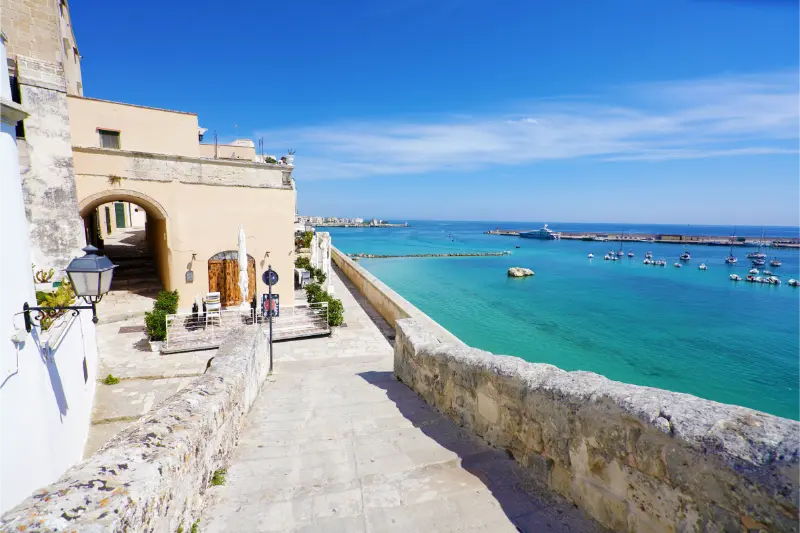
A good route is Otranto – Bauxite Quarry – Punta Palascia – Porto Badisco.
If you want to continue farther south, the coastal road eventually leads towards Santa Cesarea Terme and Castro, two excellent additions to a longer Salento road trip.
What to Eat in Otranto
Otranto is a good place to discover both traditional Salento cuisine and Adriatic seafood.
- Orecchiette served with vegetables or traditional sauces
- Fresh grilled or fried fish
- Mussels and other local seafood
- Puccia salentina filled with meat, cheese or vegetables
- Pittule, small pieces of fried dough
- Rustico leccese with béchamel, tomato and mozzarella
- Pasticciotto filled with custard
For breakfast or dessert, a pasticciotto with coffee is one of the simplest and most enjoyable ways to taste Salento.
During the busiest summer months, do not choose a restaurant only because it occupies a prime position on the waterfront. Walk a little farther from the busiest streets and compare menus before deciding where to eat.
Where to Stay in Otranto
Where you stay depends mainly on whether you prefer atmosphere, beach access or easy parking.
Otranto Old Town
Stay in or close to the historic centre if this is your first visit and you want to experience the town after most day visitors have left.

This area is particularly suitable for couples, short stays and travellers without a car.
The main disadvantage is that parking and driving can be less convenient.
Waterfront and Modern Town
The area outside the old walls can be more practical while still keeping beaches, restaurants and the historic centre within walking distance.
For many travellers, this is the best balance between convenience and atmosphere.
Alimini Area
Choose accommodation north of Otranto if spending time on the beach is your main priority.
You will have easier access to longer sandy beaches, but a car becomes much more useful for visiting Otranto’s historic centre and exploring the rest of Salento.
How to Get to Otranto
By Car
For exploring Otranto and the surrounding coastline, a car offers the greatest flexibility.
It is especially useful if you want to visit Baia dei Turchi, Alimini, the Bauxite Quarry, Punta Palascia, Porto Badisco or continue along the coast towards Castro.
From Lecce, Otranto is approximately a 45-minute drive in normal traffic conditions, although journey times can increase significantly during the busiest summer periods.
By Public Transport
Otranto can also be reached from Lecce using regional train and bus connections.
Services can vary considerably depending on the season, so always check current timetables shortly before travelling.
If you only want to explore Otranto itself, travelling without a car is possible. If you want to visit several beaches or coastal attractions during the same trip, having your own vehicle is considerably more convenient.
Nearest Airports
Brindisi Airport is generally the most convenient airport for reaching southern Salento.
Bari Airport is farther away, but it offers a wide range of connections and can be useful if Otranto is part of a longer trip through Puglia.
From either airport, you can continue by rental car or travel towards Lecce before using regional public transport.
Parking in Otranto
Parking requires some planning during the summer months.
The historic centre and nearby streets are affected by traffic restrictions, so do not automatically follow your navigation app into the oldest part of town.
The easiest strategy for most visitors is to park outside the historic centre and walk the final few minutes.
If you are visiting in July or August, arriving early in the morning can save a considerable amount of time searching for a parking space.
Traffic restrictions, parking fees and seasonal rules can change, so always check the signs displayed when you arrive.
Best Time to Visit Otranto
May and June
This is one of the best periods to visit Otranto.
The days are already warm, the landscape is greener than in late summer and the coastline is generally less crowded.
June is particularly attractive if swimming is important but you want to avoid the busiest part of the season.
July and August
These are the best months for a classic beach holiday and the liveliest atmosphere.
The disadvantages are higher accommodation prices, more traffic, crowded beaches and greater competition for parking.
If you plan to travel in August, book accommodation well in advance.
September
September is perhaps the best compromise of all.
The sea is usually still pleasantly warm, the biggest summer crowds begin to disappear and evenings are more comfortable for exploring the historic centre.
April and October
These months are excellent for sightseeing, walking and exploring the coastline, although conditions are naturally less reliable if your main priority is spending every day at the beach.
How Many Days Do You Need in Otranto?
You can see the essential sights of Otranto in half a day, but this would only give you enough time for the town itself.
- 1 day: old town plus one beach or coastal area.
- 2 days: ideal for combining the historic centre, northern beaches and the wild coastline south of town.
- 3 days: better if you want a slower beach holiday or plan several day trips.
If Otranto is part of a longer Puglia itinerary, two nights is an excellent choice.
Best Day Trips from Otranto
Lecce
Lecce provides a perfect contrast to Otranto.
Where Otranto is dominated by the sea and medieval history, Lecce is known for elaborate Baroque architecture, beautiful piazzas and atmospheric streets.
The two destinations work extremely well together during a trip through Salento.
Torre dell’Orso and Torre Sant’Andrea
North of Otranto, continue towards Torre Sant’Andrea and Torre dell’Orso, where sea stacks, cliffs and sandy beaches create some of the most distinctive scenery along the Adriatic coast of Salento.
Santa Cesarea Terme and Castro
Drive south from Otranto and the landscape becomes increasingly rocky and dramatic.
Santa Cesarea Terme and Castro are excellent stops on a coastal road trip, particularly if you prefer cliffs, coves and panoramic drives to long sandy beaches.
Santa Maria di Leuca
For a longer day trip, continue towards the southern tip of Salento at Santa Maria di Leuca.
If you have enough time, take the coastal road rather than the fastest inland route. The scenery along the way is part of the experience.
Practical Tips for Visiting Otranto
- Start sightseeing early in summer. Explore the cathedral and old town before the hottest and busiest part of the day.
- Do not try to visit every famous beach. Choose one or two places and give yourself enough time to enjoy them.
- Bring water and comfortable shoes. This is particularly useful for Punta Palascia, the Bauxite Quarry and other coastal walks.
- Check wind conditions. The Adriatic and Ionian sides of Salento can have very different sea conditions on the same day.
- Spend at least one evening in Otranto. The historic centre has a completely different atmosphere after the main day visitors leave.
Frequently Asked Questions About Otranto
Is Otranto worth visiting?
Yes. Otranto is one of the best destinations in southern Puglia if you want to combine history, beaches and coastal scenery in the same place.
The cathedral and old town make the town culturally interesting, while Baia dei Turchi, Alimini and the coastline towards Punta Palascia add a completely different side to the trip.
Can you visit Otranto in one day?
Yes. One day is enough for the old town, cathedral, castle and one nearby beach.
For a more relaxed trip that also includes the coastline north and south of Otranto, stay for at least two days.
Does Otranto have good beaches?
Yes. There are bathing areas close to the town itself, while Baia dei Turchi and Alimini are among the best-known sandy beaches nearby.
South of Otranto, the coastline becomes rockier and wilder around Baia dell’Orte, Punta Palascia and Porto Badisco.
Do you need a car in Otranto?
Not if you only want to explore the historic centre and stay close to town.
A car becomes much more useful if you plan to explore Baia dei Turchi, Alimini, Punta Palascia, Porto Badisco and the wider Salento coastline.
Is Otranto good for families?
Yes. Otranto works particularly well for families when combined with the sandy beaches north of town towards Alimini.
Families who want easy beach access may prefer accommodation outside the historic centre or along the northern coastline.
Is Otranto better than Gallipoli?
They offer very different experiences.
Otranto faces the Adriatic and combines a compact historic centre with dramatic coastal scenery. Gallipoli lies on the Ionian side and generally offers a livelier summer atmosphere with extensive sandy beaches.
If your itinerary allows it, visit both rather than choosing between them.
Is Otranto expensive?
Prices increase considerably during July and especially August, particularly for accommodation close to the historic centre and beaches.
Travelling in June or September usually provides a better balance between good weather, availability, prices and crowds.
Plan your stay
Final Thoughts: Is Otranto Worth Adding to Your Puglia Itinerary?
Absolutely.
Otranto brings together many of the things people travel to Puglia for in an unusually small area: clear Adriatic water, historic streets, good food, beautiful beaches, dramatic coastal landscapes and centuries of history.
But the best way to experience it is not to rush.
Spend time inside the cathedral rather than simply photographing it. Walk beyond the busiest streets of the old town. Choose one beach and actually enjoy it instead of trying to visit five different places in a single afternoon.
And if you have a car, drive south towards Punta Palascia and Porto Badisco at least once. This part of the coastline reveals a much wilder side of Salento.
For a wider trip through the region, a particularly good route is to combine Lecce and Otranto before continuing along the Adriatic coast towards the southern tip of Puglia.
Otranto may be small, but a couple of days here can easily become one of the most memorable parts of a trip through Puglia.
Explore more of this area: for a wider route, nearby towns, beaches, where to stay and practical planning, see our Salento Travel Guide.
2 thoughts on “Otranto Travel Guide: Beaches, Old Town & Things to Do”